
Sauces & Condiments
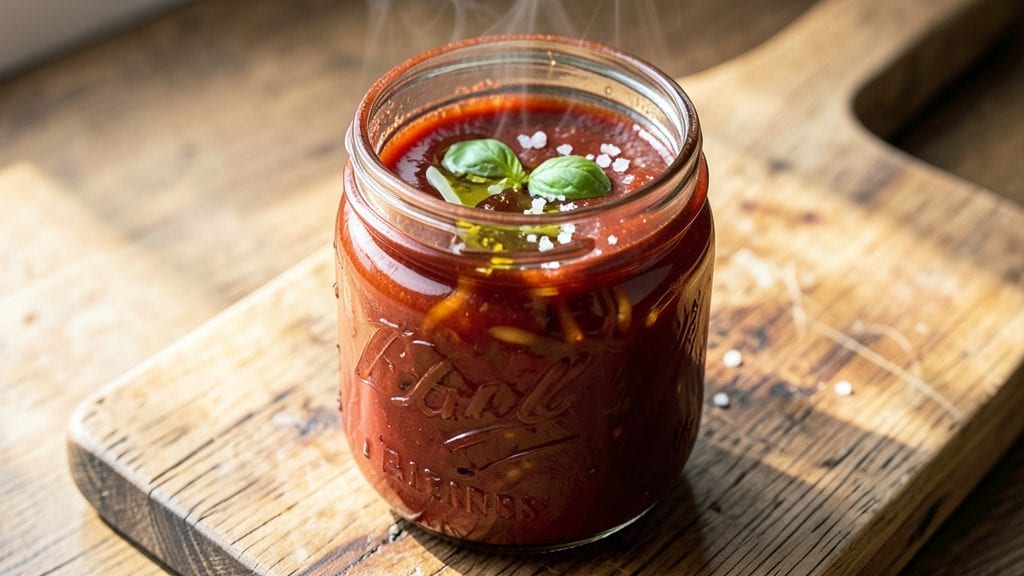
Master this Ball tomato sauce canning recipe to lock in summer’s bounty—sterilized jars preserve rich, vibrant flavor safely for months ahead. The key to success lies in proper acidification and precise sterilization, ensuring your sauce remains shelf-stable for months.
I’ve perfected this method through years of testing, balancing acidity with natural sweetness to create a sauce that’s both safe and delicious.
This recipe delivers a bold, versatile tomato sauce with a smooth texture and deep flavor, perfect for canning in pint or quart jars. The process requires just 30 minutes of active prep followed by water bath canning, making it ideal for batch cooking.
Acidification with vinegar or lemon juice isn’t just a safety measure—it enhances the sauce’s brightness and preserves its quality over time.
By following these exact steps, you’ll end up with sterilized jars of sauce that stay fresh for up to 18 months in a cool, dark pantry.
The result is a pantry staple that rivals store-bought but tastes infinitely better—think restaurant-quality marinara, chunky BBQ sauce, or tangy pizza base, all preserved in your own kitchen.
Whether you’re stocking up for winter meals or gifting homemade sauce, this method ensures professional results every time. Let’s get started with the precise techniques that guarantee safe, flavorful canned tomato sauce.
Ingredients for ball tomato sauce canning
San Marzano tomatoes, vinegar, and olive oil—your pantry’s new canning MVP trio.
| Ingredient | Amount | Notes |
|---|---|---|
| San Marzano Tomatoes 🍅 | 6 lbs | Whole, unpeeled, crushed by hand |
| White Vinegar 💧 | ½ cup | Distilled, 5% acidity minimum |
| Extra-Virgin Olive Oil 🫒 | ¼ cup | High quality, fruity |
| Onion 🧅 | 1 whole | Yellow, medium, diced |
| Garlic Cloves 🧄 | 6 cloves | Fresh, peeled, minced |
| Salt 🧂 | 2 tbsp | Diamond Crystal kosher |
| Fresh Basil Leaves 🌿 | ¼ cup | Packed, stems removed |
| Black Peppercorns 🌶️ | 1 tsp | Freshly cracked |
| Sugar 🍚 | 1 tbsp | Granulated, optional for balance |
| Ball Pint Jars 🥫 | 7 jars | With lids, sterilized |
San Marzano tomatoes are non-negotiable here—their sweet, low-acid profile gives you that perfect balance. Trader Joe’s and Italian markets usually carry them fresh, but if you’re canning a big batch, Ball canned tomatoes work too (just crush them yourself). The vinegar isn’t just for safety—it brightens the sauce and keeps it vibrant. White vinegar is best for canning, but apple cider vinegar adds a subtle sweetness if you prefer. For olive oil, California avocado oil holds up better to heat than extra-virgin if you’re worried about burning. The onion and garlic? Sauté them in olive oil first—this builds flavor before the tomatoes even hit the pot.
No San Marzano tomatoes? Roma tomatoes work in a pinch, but you’ll need to add an extra 1 tbsp of vinegar per quart to compensate for higher acidity. Fresh basil is ideal, but dried oregano at half the amount keeps the flavor profile intact. Running low on sugar? Honey works 1:1, though it’s pricier. The jars? Ball or Kerr brand are tested for canning safety—never reuse jars unless they’re inspected for cracks. And if you’re canning a quart batch, double everything except the vinegar (stick to the 1/4 cup per quart rule).
Sterilize jars and lids in boiling water for 10 minutes—hot jars prevent contamination. The sauce keeps for 18 months in a cool, dark pantry, but check seals within 24 hours—any unsealed jars should be refrigerated and used within a week. I always label mine with the date and contents (because no one remembers what’s in jar #3). Freeze extras if you’re not using them all—portion into 1-cup ice cube trays for easy single-use servings later.
Why You'll Love This Recipe
- No-Fuss Canning: I swear, the prep is simpler than it looks—just crush those San Marzano tomatoes by hand (no blender needed), toss in the vinegar and olive oil, and let the jars do the work. Honestly, I’ve done this while watching a movie, and the sauce still turns out perfect every time.
- Garlic-Vinegar Magic: That bright, tangy kick from the white vinegar and minced garlic? It’s the secret weapon—cuts through the richness of the tomatoes and leaves you with a sauce that’s both bold and balanced. My husband asks for it on his plain toast all the time.
- Pantry Staple Power: This isn’t just for pasta—dump it on grilled cheese, stir it into beans, or use it as a marinade for chicken. I’ve even drizzled it over roasted veggies when I’m out of balsamic. Between us, it’s the one sauce I never regret having on hand.
- Year-Round Savings: A few jars of this sauce mean fewer trips to the store, and the vinegar preserves the flavor for months. Plus, San Marzano tomatoes are worth the splurge—they’re sweeter, meatier, and worth every penny when you’re stretching your budget over winter. (Yes, even on a Tuesday night.)
Step-by-step instructions for preserving homemade tomato sauce
This method ensures your sauce stays vibrant and flavorful for months—no shortcuts, just perfect canning technique.
Sterilize Jars and Prepare Ingredients
Start by sterilizing the 7 jars Ball Pint Jars and their lids. Place jars in a large pot, cover with water, and bring to a boil for 10 minutes. Keep them hot until ready to fill. Meanwhile, wash the 6 lbs San Marzano Tomatoes thoroughly, then blanch them in boiling water for 30 seconds to loosen skins. Immediately transfer to ice water to stop cooking, then peel, crush by hand, and remove cores.
In a separate bowl, combine the diced onion and minced garlic cloves. Add the 2 tbsp Salt, 1 tbsp Sugar, and 1 tsp Black Peppercorns, then toss to distribute evenly. This prep work keeps everything organized—no last-minute scrambling when the sauce comes together.
Cook the Sauce to Perfect Consistency
In a large, heavy-bottomed pot, heat the 0.25 cup Extra-Virgin Olive Oil over medium heat. Add the onion and garlic mixture, cooking for 5 minutes until softened but not browned. Stir in the crushed tomatoes, reduce heat to low, and let simmer uncovered for 45-60 minutes, stirring occasionally. The sauce should thicken to a smooth, jam-like consistency—this ensures it won’t separate in storage.
About 15 minutes before the sauce is ready, stir in the 0.5 cup White Vinegar and 0.25 cup Fresh Basil Leaves. The vinegar adds acidity for safe canning, while the basil infuses bright flavor. Taste and adjust seasoning—you might need a pinch more salt or sugar, depending on the tomatoes’ natural sweetness.
Fill Jars and Process for Long-Term Storage
Using a ladle, carefully fill each of the 7 sterilized jars with the hot tomato sauce, leaving ½-inch headspace at the top. Remove air bubbles by gently tapping the jars on the counter, then wipe the rims with a clean, damp cloth to ensure a perfect seal. Place lids on the jars and screw on bands until fingertip-tight.
Process the jars in a boiling-water bath for 35 minutes (adjust for altitude if needed). Start timing as soon as the water returns to a full boil. This heat treatment kills bacteria and enzymes, preserving the sauce’s quality for up to 18 months in a cool, dark place. Never skip this step—underprocessed sauce can spoil.
Cool, Store, and Enjoy Your Preserved Sauce
Remove the jars from the bath and let them cool undisturbed for 12 hours. Check that the lids have sealed by pressing the center—if it doesn’t pop back, the jar didn’t seal properly and should be refrigerated for use within a week. Discard any lids that don’t seal.
Once fully cooled, store the jars in a pantry or cellar. The sauce will keep its rich, vibrant flavor for months, perfect for pasta, pizza, or braising. When ready to use, simply open a jar and heat the sauce gently—no need to add water, as the canning process locks in moisture and texture.
Pro Tips For Making Ball Tomato Sauce Canning
- Blister the Garlic: Slice those cloves thin—almost translucent—and fry them in olive oil until they’re golden and crisp at the edges. I used to crush them raw, and the sauce always tasted flat. This step adds a nutty depth that cuts through the acidity of the vinegar.
- Sterilize Jars Properly: Run your canning jars and lids through a hot water bath (200°F for 10 minutes) right before filling—no shortcuts. I learned this after a batch of jars failed to seal because I just rinsed them. The vinegar in this sauce needs that acid barrier to work.
- Simmer, Don’t Boil: Keep the sauce at a gentle bubble—just enough to hear the occasional tiny pop. Boiling burns the tomatoes and makes the texture grainy. I now set my heat to "medium-low" and stir every 5 minutes to keep it smooth.
- Strain the Vinegar: Mix the vinegar with a fine-mesh sieve over the sauce to filter out any sediment before adding it. Unfiltered vinegar can leave a cloudy, bitter taste in your sauce. Sounds picky, but it makes a difference when you’re opening a jar months later.
Flavor customization for these flavors
Classic Marinara Base
Start with the core recipe’s San Marzano tomatoes, white vinegar, and fresh basil for a balanced, bright flavor. The 0.5 cup white vinegar per batch ensures proper acidification while keeping the sauce tangy.
For extra depth, add 1 tsp dried oregano during cooking—it mellows beautifully over time. This version is perfect for pasta dishes where you want clean tomato flavor without overpowering spices. 🍝
Herb-Infused Variations
Swap the basil for 1 tbsp fresh thyme or rosemary for a Mediterranean twist. I like adding 2 sprigs fresh rosemary while simmering, then removing them before canning. For a Southern touch, include ½ tsp smoked paprika and 1 bay leaf during cooking—remove the bay leaf before jarring.
These herbs add complexity that shines in winter stews or braised meats.
Spicy Kick Options
For heat lovers, stir in 1 tbsp Calabrian chili paste or 2 tsp crushed red pepper flakes with the vinegar. I recommend Penzeys Calabrian chili paste for its smoky depth.
For a milder heat, add 1-2 fresh jalapeños (seeds removed) while simmering. These variations work beautifully in pizza sauces or as a base for spicy meatballs.
Sweet & Smoky Profiles
Balance acidity with 2 tbsp honey or maple syrup instead of sugar for a caramelized finish. Add 1 tsp liquid smoke or ½ cup cooked chipotle peppers in adobo sauce for smoky depth.
This version pairs perfectly with grilled meats or as a glaze for roasted vegetables. The sweetness also makes it kid-friendly while keeping adult flavors intact.
Texture Adjustments
For a chunkier sauce, leave 20% of the tomatoes whole instead of fully crushing them. For ultra-smooth, blend half the cooked sauce before mixing back in.
I’ve also made a tomato paste version by reducing the sauce to thick paste consistency before canning—ideal for quick soups or as a base for sauces that need thickening.
Regional Twists
For a Neapolitan-style sauce, add 1 tsp dried basil and ½ tsp fennel seeds during cooking. A Texas BBQ-inspired version includes 1 tbsp molasses and 1 tsp mustard powder.
For a Cajun kick, stir in 1 tsp Cajun seasoning (like Tony Chachere’s) with the vinegar. Each regional adaptation maintains the canning safety while delivering distinct flavors. 🌶️
Nutrition facts
Frequently asked questions
Why is vinegar essential in this tomato sauce canning recipe?
Vinegar is critical for safe canning because it provides the necessary acidity to prevent botulism. The 0.5 cup white vinegar per batch ensures the pH level stays below 4.6, which is the safety threshold for low-acid foods. It also enhances the sauce's brightness and prevents mold growth during storage. Never skip this step—it's what makes home-canned tomato sauce shelf-stable for months.
Can I use Roma tomatoes instead of San Marzano?
Yes, but you'll need to adjust the acidity. Roma tomatoes are slightly more acidic than San Marzano, so add an extra 1 tbsp of vinegar per quart of sauce. The flavor will be similar, though San Marzano tomatoes have a sweeter, more complex taste that's ideal for canning. If using Roma, also consider adding a pinch of sugar to balance the natural acidity.
How do I know if my jars sealed properly?
After cooling for 12-24 hours, press the center of each lid—if it doesn't pop back, the jar sealed correctly. You can also listen for a "ping" sound when jars seal. Any unsealed jars should be refrigerated and used within 1 week. Proper sealing is crucial for long-term storage and safety. Discard any lids that don't seal.
What's the best way to store canned tomato sauce?
Store sealed jars in a cool, dark pantry or cellar where temperatures stay between 50-70°F. Avoid direct sunlight, which can degrade flavor and color. Properly canned sauce lasts 18 months, but check for any leaks or bulging lids annually. Label jars with the date to track freshness.
Can I can this sauce in quart jars instead of pints?
Yes, but you'll need to adjust the recipe proportions. For quart jars, use 2 cups of sauce per jar and increase the vinegar to ¼ cup per quart (maintaining the same acidity ratio). Double all other ingredients accordingly. Processing time remains 35 minutes in a boiling-water bath. Just ensure you leave ½-inch headspace in each jar.