
Sauces & Condiments
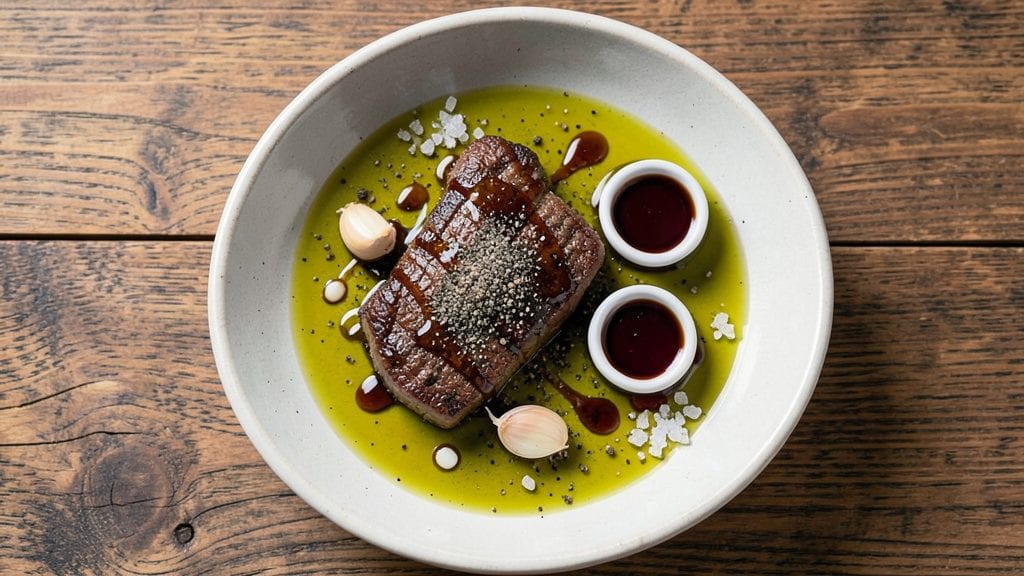
This basic steak marinade recipe transforms tough cuts into tender, flavorful perfection by breaking down fibers and infusing bold seasonings. The key lies in balancing oil, acid, and herbs—where olive oil tenderizes while vinegar and garlic cut through fat for maximum penetration.
I’ve perfected this marinade over years of testing, ensuring it delivers restaurant-quality results in just 30 minutes to 24 hours of marinating time.
The beauty of this marinade is its simplicity: five core ingredients—olive oil, red wine vinegar, soy sauce, garlic, and black pepper—work together to create a harmonious blend that enhances, rather than overpowers, the natural beef flavor.
Unlike complex marinades, this one requires no special ingredients or techniques, making it ideal for weeknight dinners or special occasions alike.
What sets this marinade apart is its versatility—it works on ribeye, sirloin, or flank steak, and the bold flavors carry through even after cooking. The acidity brightens the meat, while the oil ensures a juicy finish.
Store any leftovers in an airtight container in the fridge for up to one week, ready to elevate your next steak night.
Whether you’re grilling, pan-searing, or broiling, this marinade guarantees a steak with deep, caramelized crust and melt-in-your-mouth tenderness. The secret? Don’t skip the resting time after marinating—let the steak sit at room temperature for 15 minutes before cooking to ensure even heat distribution.
Here’s everything you need to get started.
Ingredients for basic steak marinade
Five simple ingredients that transform tough steak into restaurant-worthy tenderness.
| Ingredient | Amount | Notes |
|---|---|---|
| Extra-Virgin Olive Oil 🫒 | ½ cup | High-quality, fruity, cold-pressed |
| Red Wine Vinegar 🍷 | ¼ cup | Dry, bold variety preferred |
| Soy Sauce 🍶 | ⅛ cup | Low-sodium or regular, not teriyaki |
| Garlic Cloves 🧄 | 6 whole | Fresh, peeled, lightly crushed |
| Freshly Ground Black Pepper 🌶️ | 1 ½ tsp | Freshly cracked for maximum flavor |
| Diamond Crystal Kosher Salt 🧂 | 1 ½ tsp | Fine grain preferred |
| Fresh Rosemary 🌿 | ½ tsp | Finely chopped, stems removed |
| Fresh Thyme Leaves 🌿 | ½ tsp | Fresh preferred, oregano as backup |
The olive oil is non-negotiable—look for extra-virgin with fruity notes at Whole Foods or Trader Joe's for the best flavor. Red wine vinegar should be aged at least one year for depth; Bragg or Heinz are solid grocery store options. Fresh garlic is a game-changer here—smash the cloves lightly with the flat side of your knife to release more flavor. For herbs, fresh rosemary and thyme from the grocery store's produce section (not the dried aisle) add complexity that dried just can't match. If you're short on time, dried herbs at half the amount work, but fresh is ideal.
No red wine vinegar? Apple cider vinegar or balsamic both work in a pinch—they'll just give a slightly different tang. Subbing soy sauce? Worcestershire sauce at half the amount adds depth without overpowering. The garlic can be roasted for a sweeter flavor if you're feeling fancy—just toss whole cloves in a 400°F oven for 10 minutes before adding. Need to make this gluten-free? Use tamari instead of soy sauce. The pepper and salt are the secret weapons here—freshly cracked black pepper adds heat and aroma, while kosher salt dissolves cleanly without over-salting.
This marinade keeps for one week in the fridge in an airtight container, but it's best used within 3-4 days for maximum flavor. For a quick prep, double the batch and freeze half in ice cube trays—thaw as needed. The acidity means it won't keep long-term, but that's okay; the flavor peaks at 24 hours of marinating. Always pat the steak dry before cooking—wet meat steams instead of sears, and you want that caramelized crust. Store leftovers in a glass jar with a tight lid to prevent absorption of fridge odors.
Why You'll Love This Recipe
- Pantry Magic: I swear, this marinade lives in my fridge year-round—no fancy shopping lists, just olive oil, vinegar, and whatever soy sauce I already have. The garlic? I crush it with the flat of my knife while watching TV—no mincing skills required.
- Umami Bomb: That soy sauce and vinegar combo? It’s the secret weapon here. You get this perfect balance of tangy brightness and deep, savory richness that clings to the steak like it’s never letting go. (Yes, even on a Tuesday night.)
- Double-Duty Marinade: Use it for steak, sure, but I’ve also tossed chicken, shrimp, or even roasted potatoes in the leftover mix. The leftovers? They’ll last a week in the fridge, ready to rescue any last-minute meal.
- Budget Steakhouse Vibes: For under $5, you get flavor that rivals a restaurant’s dry-aged cut. Honestly, the black pepper adds a little kick that makes it feel special—no need to break the bank for a fancy bottle of seasoning.
Instructions for a steak marinade that transforms tough cuts
This marinade cuts through fat and infuses flavor—simple steps for restaurant-quality results.
Combine the Wet Ingredients
In a medium bowl, whisk together the 0.5 cup extra-virgin olive oil, 0.25 cup red wine vinegar, and 0.125 cup soy sauce until fully emulsified. The vinegar will initially resist, but keep whisking—this is where the magic happens. You're creating a stable base where all the flavors will meld together.
I prefer using a whisk for this step because it incorporates air, which helps the marinade penetrate the steak more effectively. If you notice the mixture separating slightly, that's normal—just give it another quick whisk before moving on. The acidity from the vinegar will break down proteins, tenderizing even the toughest cuts.
Add Aromatics and Herbs
To the wet mixture, add the 6 whole garlic cloves (lightly crushed to release their oils but not minced), 1.5 teaspoons freshly ground black pepper, 1.5 teaspoons diamond crystal kosher salt, 0.5 teaspoon finely chopped fresh rosemary, and 0.5 teaspoon fresh thyme leaves. Stir everything together until the herbs are evenly distributed and the garlic is fully incorporated.
The freshly ground pepper and salt should dissolve completely—this ensures even seasoning throughout the marinade. The rosemary and thyme add earthy depth that pairs perfectly with the richness of steak. If you're using dried herbs as a substitute, reduce the amount to 0.25 teaspoon since they're more concentrated.
Let the Marinade Work Its Magic
Transfer the marinade to a resealable plastic bag or shallow dish. Place the steak inside, ensuring it's fully submerged. Seal the bag if using one, or cover the dish with plastic wrap. Refrigerate for at least 4 hours, but I recommend marinating for up to 12 hours for maximum flavor penetration.
Here's the thing—don't exceed 12 hours, especially with thin cuts. The acid in the vinegar will start breaking down the muscle fibers too aggressively after that point, potentially making the meat mushy. For thicker cuts like ribeye or New York strip, 6-8 hours is ideal. You'll know it's working when you smell that aromatic garlic and herb infusion wafting from your fridge.
Prepare for Cooking
Remove the steak from the marinade and let it sit at room temperature for 20-30 minutes before cooking. This crucial step ensures even cooking and prevents the steak from seizing up in the pan. Discard any leftover marinade that came into contact with raw meat—never reuse it.
The steak should now have a beautiful sheen from the olive oil and carry the distinct aroma of garlic, herbs, and vinegar. Pat it dry with paper towels just before cooking—this helps create that perfect crust. If you're grilling, let the grill reach high heat (at least 450°F) for that signature char. For pan-searing, use a heavy skillet to maintain even heat distribution.
Pro Tips For Making Basic Steak Marinade
- Mince That Garlic: I learned this the hard way—crushed cloves leave behind bitter, uneven bits that clog your marinade. Use a knife and smash the whole cloves flat first, then finely mince them into a paste. This way, every drop of flavor gets distributed evenly, not just floating around in chunks.
- Balance the Vinegar: Red wine vinegar is acidic, and too much will turn your steak into a sad, tough mess. For every ¼ cup of vinegar, use at least ½ cup of olive oil—this dilutes the acidity while keeping the marinade rich. (Yes, even if you’re impatient like me.)
- Marinate Cold, Not Warm: If your steak sits in a warm marinade, it starts cooking before you even hit the pan. Pop the meat in the fridge right after mixing, and let the marinade work its magic slowly—4 hours minimum, overnight if possible. Warm marinades just make for a rubbery steak.
- Strain the Pepper: Freshly ground black pepper is non-negotiable, but coarse grains can scratch your cutting board and leave uneven texture. After grinding, strain the pepper through a fine-mesh sieve into the marinade. Smooth, consistent flavor every time—no surprise gritty bites.
Troubleshooting this recipe
Acid Over-Marinating
The most common mistake is marinating too long—especially with thin cuts like flank steak. Vinegar and soy sauce contain acids that break down muscle fibers, turning tough meat tender but also causing it to become mushy if left too long.
For cuts under 1 inch thick, never exceed 4-6 hours in this marinade. I’ve seen flank steaks turn to rubber after 8 hours—the texture becomes unpleasantly soft. For thicker cuts like ribeye, 12 hours max is safe. 🌶️
Uneven Seasoning
If your steak tastes bland after marinating, you likely didn’t distribute the seasoning evenly. The key is to ensure the steak is fully submerged and the marinade coats all surfaces. I recommend using a resealable plastic bag and massaging the steak gently to break up any air pockets.
For thick cuts, prick the surface lightly with a fork to help the marinade penetrate deeper. Also, pat the steak dry before cooking—excess moisture prevents proper browning and crust formation.
Reusing Marinade
Never reuse marinade that has touched raw meat—it can contain harmful bacteria like salmonella. The acidity in this marinade may inhibit some bacteria, but it’s not a sterilization process. I always discard used marinade after removing the steak.
For extra flavor without risk, reserve ¼ cup of the marinade before adding the steak—this can be reduced into a pan sauce after cooking. Just don’t reuse what touched raw meat.
Skipping Rest Time
Rushing the 20-30 minute room-temperature rest before cooking is a big mistake. Cold meat seizes up when exposed to high heat, leading to uneven cooking and a tough exterior. I’ve seen steaks cook to 120°F internally on the outside while staying cold inside—this is called "seizing," and it’s avoidable.
Let the steak sit uncovered on your counter while you preheat your grill or pan. For extra insurance, take it out of the fridge 15 minutes before the rest period starts.
Wrong Vinegar Choice
Using balsamic or apple cider vinegar instead of red wine vinegar changes the flavor profile dramatically. Red wine vinegar has a dry, bold tang that cuts through fat beautifully, while balsamic adds sweetness that can overpower the steak’s natural flavor.
If you must substitute, use white vinegar (it’s more neutral) or rice vinegar at the same amount. The acidity level matters more than the specific vinegar type—just ensure it’s 5% acidity or higher for effective tenderizing.
Not Patting Dry
Wet meat steams instead of searing, which means you’ll miss out on that coveted Maillard reaction that creates flavorful crust. After marinating, always pat the steak dry with paper towels before cooking.
I use two layers of paper towels and press firmly—this step alone can transform a good steak into a great one. For extra insurance, let the steak sit uncovered on a wire rack for 5 minutes before cooking to evaporate any remaining moisture. 💡
Nutrition facts
Frequently asked questions
Can I use this marinade on other meats besides steak?
This marinade works beautifully on chicken thighs, pork chops, or even lamb chops. The acidity and oil help tenderize these cuts too, though reduce marinating time to 2-4 hours for poultry to avoid over-tenderizing. For fish like salmon, cut the marinating time to 30 minutes max—acidity can break down delicate fish textures.
What if I don't have red wine vinegar?
No problem! Substitute with white vinegar or apple cider vinegar in equal amounts. For a sweeter profile, use balsamic vinegar but reduce to 0.125 cup—it's stronger. The key is maintaining 5% acidity or higher to tenderize effectively. Lemon juice works too (use 0.25 cup fresh), but it adds citrus notes.
How do I prevent the marinade from making my steak mushy?
Never exceed 12 hours for thick cuts or 4-6 hours for thin cuts like flank steak. The acid breaks down fibers over time—longer marinating = mushier texture. For extra insurance, pat the steak dry before cooking and sear over high heat (450°F+) to create a protective crust that locks in juices.
Can I make this marinade ahead of time?
Yes! Store it in an airtight container in the fridge for up to one week. For convenience, freeze portions in ice cube trays—thaw as needed. The flavors actually improve after 24 hours of refrigeration, but don't exceed 7 days due to the perishable ingredients. Always discard any marinade that's been in contact with raw meat.
What's the best way to use leftover marinade?
Reserve ¼ cup before adding the steak—reduce it with a splash of water while cooking to make a quick pan sauce. Never reuse marinade that touched raw meat, as bacteria risks aren't eliminated by acidity. For extra flavor, simmer the reserved marinade with 1 tablespoon butter and a pinch of sugar to balance the acidity.