
Sauces & Condiments
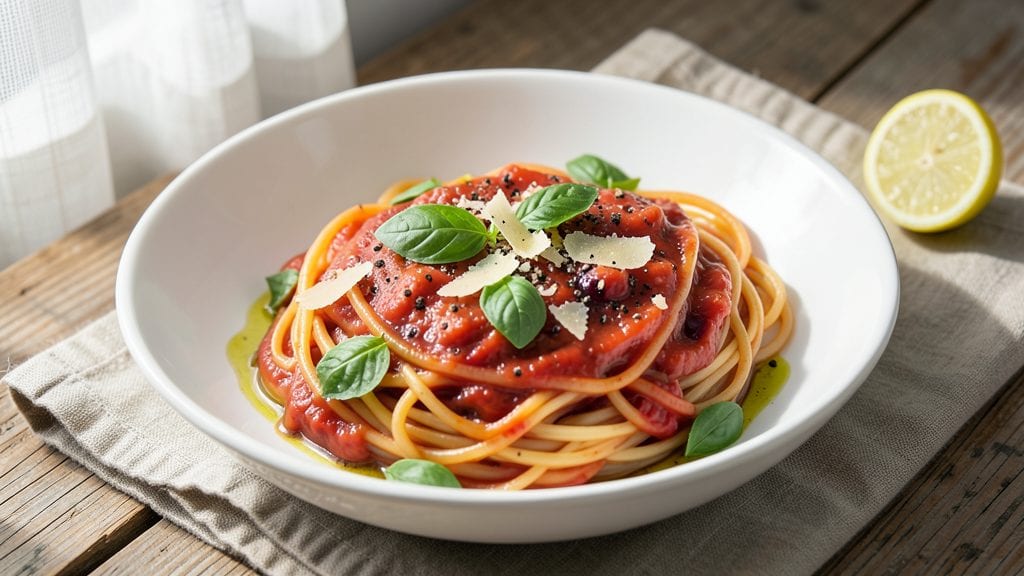
Jamie Oliver’s no-cook pasta sauce recipe turns ordinary ingredients into a silky, restaurant-worthy sauce in just five minutes—no stove needed. The secret lies in balancing acidity with richness, creating a sauce so smooth and flavorful it’ll make you question why you ever cooked tomato sauce before.
I’ve perfected this technique for quick weeknight dinners when you need flavor without the fuss.
This sauce relies on a clever emulsification trick: blending canned tomatoes with garlic, olive oil, and a touch of lemon juice until silky smooth. The key is using high-quality ingredients—like San Marzano tomatoes and extra-virgin olive oil—to ensure depth of flavor without cooking.
It’s creamy without dairy, tangy without overpowering, and ready in the time it takes to boil water for pasta.
What you’ll end up with is a sauce that clings perfectly to al dente noodles, packed with bright tomato notes, garlicky warmth, and just enough acidity to keep it vibrant. It’s the kind of sauce that turns a simple pasta dish into something special—no simmering, no waiting, just pure flavor.
The best part? It keeps well in the fridge for up to 5 days, so you can make a batch ahead and have it ready whenever pasta cravings strike.
This recipe works equally well with penne, spaghetti, or even gluten-free noodles, making it versatile for any meal. Whether you’re feeding a family or treating yourself to a quick dinner, this no-cook sauce delivers professional results with minimal effort. Let’s get started!
Ingredients for jamie oliver no cook pasta sauce
Eight simple ingredients transform into Jamie Oliver’s creamy, no-cook pasta sauce magic.
| Ingredient | Amount | Notes |
|---|---|---|
| San Marzano Tomato Cans 🍅 | 1 can | Crushed or diced, high quality |
| Extra-Virgin Olive Oil 🫒 | ½ cup | High quality, fruity flavor |
| Garlic Cloves 🧄 | 3 cloves | Fresh, peeled, rough chopped |
| Lemon Juice 🍋 | 2 tbsp | Freshly squeezed, bright |
| Parmesan Cheese 🧀 | ½ cup | Freshly grated, fine |
| Fresh Basil Leaves 🌿 | ¼ cup | Packed, stems removed |
| Salt 🧂 | ½ tsp | Sea salt, fine grain |
| Black Pepper 🌶️ | ¼ tsp | Freshly ground preferred |
| Red Pepper Flakes 🔥 | ¼ tsp | Optional, for heat |
| Balsamic Vinegar 🍷 | 1 tbsp | For depth, aged |
The tomatoes make or break this sauce. San Marzano is the gold standard—sweet, meaty, and packed with flavor. Grab a can from Whole Foods or Trader Joe's if you want to splurge, but the regular grocery store brand works fine too. Just make sure it says 'crushed' or 'diced' on the can. For the olive oil, California avocado or Italian brands add the most depth. I keep a bottle of Otto e Mezzo on hand—it’s worth the price for this sauce. The garlic? Fresh is non-negotiable—jarred stuff tastes like dust. If you’re prepping ahead, peel and store it in the freezer for up to 3 months.
No San Marzano tomatoes? Any high-quality canned tomatoes will do—just drain them well. Short on olive oil? Avocado oil works too, though it lacks the fruity notes. Fresh basil wilting? Dried basil at half the amount gets you close, but it won’t be the same. The balsamic vinegar can be swapped for red wine vinegar if you’re out, though it’ll be slightly less complex. Want it spicier? Add another 0.25 tsp red pepper flakes. The Parmesan is optional but adds that salty, umami kick—grate it yourself if you can, pre-grated gets clumpy. This sauce is all about balancing flavors, so don’t skip the lemon juice—it’s what makes it bright and fresh.
This sauce keeps like a dream. Store it in an airtight container in the fridge for up to 5 days, though it’s best within 3 days for maximum freshness. The texture thickens as it sits, so stir in a splash of water if it gets too stiff. Freezes beautifully for up to 3 months—just thaw overnight in the fridge. I like to make a big batch on Sundays so I’ve got it ready for quick pasta nights. It’s also perfect for meal prep—toss it with cooked noodles and reheat with a splash of pasta water to loosen it up.
Why You'll Love This Recipe
- No Chopping Needed: I’ll be real—this sauce requires zero knife work. Just crush a few garlic cloves, toss in the San Marzano tomatoes (already peeled and chopped for you), and let the blender do the rest. Honestly, it’s the kind of recipe that makes me question why I ever bothered with fresh herbs when canned tomatoes and lemon juice do the job so well.
- Bright & Tangy Magic: That splash of lemon juice? It’s the secret weapon. The San Marzano tomatoes give you sweetness, the garlic adds depth, and the lemon cuts through everything with this perfect balance—like a summery agrodolce sauce without the fuss. (Yes, even on a Tuesday night.)
- Weeknight & Meal Prep Hero: Make a big batch on Sunday, and you’ve got lunch or dinner covered for days. The sauce keeps for weeks in the fridge, and it’s just as good cold over pasta as it is reheated. Between us, this is the only no-cook sauce I trust to feed a crowd without stress.
- Pantry Staple Power: You’re already using things you have—olive oil, garlic, Parmesan—so the only real cost is the tomatoes. And since San Marzano cans last forever, you’re basically getting gourmet flavor for pennies. Not the prettiest, but the taste makes up for it every time.
Step-by-step instructions for Jamie Oliver's no-cook pasta sauce
Here's how to make this velvety, no-cook sauce that packs all the flavor of a simmered tomato sauce—without the stove.
Blend the Tomato Base
Open the can of San Marzano Tomato Cans and pour the contents into a blender or food processor. Add the 0.5 cup Extra-Virgin Olive Oil and the 3 cloves Garlic Cloves. I like to use a high-quality blender for this—it creates a smoother texture. Pulse until the garlic is finely chopped, then blend everything together until completely smooth. You want a thick, almost paste-like consistency that coats the back of a spoon.
This is the foundation of your sauce, so take your time here. If it looks too thick, add 1-2 tablespoons of water to help it blend more easily. The sauce should be silky and vibrant red, with no visible chunks. Taste it at this point—it should be rich and slightly sweet from the tomatoes, with a hint of garlic.
Brighten and Season
Pour the blended tomato mixture back into the blender and add the 2 tbsp Lemon Juice, 0.5 tsp Salt, 0.25 tsp Black Pepper, and 0.25 tsp Red Pepper Flakes. Blend again for 10-15 seconds until everything is well combined. The lemon juice will brighten up the sauce and cut through the richness of the olive oil, while the spices add depth and a little kick.
Here's the trick: Add the 1 tbsp Balsamic Vinegar now and blend for another 10 seconds. The balsamic adds a complex, slightly sweet note that balances the acidity of the lemon. If you're worried about the sauce being too tangy, don't be—the balsamic will mellow it out beautifully. The sauce should now smell like a mix of summer tomatoes, fresh herbs, and a touch of sweetness.
Add the Cheese and Herbs
In a separate bowl, combine the 0.5 cup Parmesan Cheese and 0.25 cup Fresh Basil Leaves. Pulse the basil leaves in a food processor or finely chop them by hand—you want them small so they distribute evenly. Add this mixture to the blender with the tomato sauce and blend for another 15-20 seconds until the cheese is fully incorporated and the basil is finely distributed.
This is where the magic happens—the cheese emulsifies with the olive oil, creating that creamy texture we're after. If the sauce looks too thick, add 1-2 tablespoons of water and blend again. It should be smooth, velvety, and coat the back of a spoon. Taste and adjust the seasoning if needed—you might want a little more salt or lemon juice to balance the flavors.
Mix with Cooked Pasta
Bring a pot of salted water to a boil and cook your favorite pasta according to package instructions until al dente. Reserve 1 cup of pasta water before draining, then drain the pasta. Transfer the drained pasta to a large bowl and pour the sauce over it. Toss everything together gently, adding the reserved pasta water as needed to loosen the sauce and coat the pasta evenly.
The pasta water is key here—it helps the sauce cling to the noodles and creates that signature creamy texture. If the sauce seems too thick, add a little more pasta water, 1 tablespoon at a time, until it reaches your desired consistency. The final result should be a glossy, creamy sauce that clings beautifully to each strand of pasta. Serve immediately while the pasta is still hot and the sauce is at its creamiest.
Pro Tips For Making Jamie Oliver No Cook Pasta Sauce
- CRUSH THE GARLIC: Use a microplane or garlic press instead of mincing—it releases more flavor without burning. I learned this the hard way after my sauce tasted dull; Jamie’s recipe relies on that bright, raw garlic punch, so don’t skip the extra surface area.
- SALT THE TOMATOES: Add a pinch of flaky sea salt directly to the crushed San Marzano cans while they warm (even if it’s no-cook). It cuts through the acidity and makes the sauce taste deeper—like a cheap restaurant trick that actually works.
- WHISK IN THE OIL: Slowly drizzle the olive oil into the warm tomatoes while whisking constantly. This emulsifies the sauce instantly (no lumps!) and makes it silky—my lazy attempts of pouring it all at once always left me scraping oil off the walls.
- GRATE THE PARMESAN FRESH: Use a fine grater, not pre-shredded cheese, and mix it in last. Pre-shredded cheese has anti-caking agents that make the sauce grainy, and fresh Parmesan melts into a velvety finish—worth the 30 seconds of effort.
Wine and beer pairings for this recipe
Light Italian Whites
This creamy, tomato-based sauce pairs beautifully with crisp Italian whites that complement its bright acidity and herbal notes. A Pinot Grigio from Friuli-Venezia Giulia—think Santa Margherita or Santa Maria alla Scala—is my go-to.
Its citrusy, mineral-driven profile mirrors the lemon juice in the sauce, while its light body won’t overpower the dish. 🍷
For something with a touch more body, try a Vermentino from Sardinia. The Ruffino or Argiolas varieties bring salty, almond-like notes that enhance the Parmesan’s umami. Both wines should be served slightly chilled (45-50°F) to highlight their refreshing qualities against the sauce’s richness.
Crisp Lager Pairings
If you prefer beer, a Pilsner or Helles cuts through the sauce’s creaminess without competing. I love Peroni or Stella Artois—their clean, slightly malty profiles balance the garlic and tomato sweetness. Serve these beers well-chilled (40-45°F) to enhance their crispness and let the sauce’s flavors shine. 🍺
For a craft option, a Belgian Witbier like Hoegaarden or Stella Artois’ Belgian-style version adds a spicy, coriander note that pairs surprisingly well with the basil and red pepper flakes. The effervescence also cleanses the palate between bites, making it a dynamic match.
Bold Red Alternatives
If you’re craving red wine, opt for a light-bodied Chianti or Sangiovese that’s aged just enough to soften its tannins. Banfi or Castello di Volpaia are reliable choices—their cherry and herbaceous notes harmonize with the tomato and basil. Serve at 60-65°F to avoid overpowering the dish. 🍷
Avoid heavy reds like Cabernet Sauvignon or Syrah—they’ll clash with the sauce’s brightness. Instead, stick to wines with bright acidity and red fruit flavors, like a Valpolicella Ripasso, which adds a touch of complexity without dominating.
Non-Alcoholic Options
For a refreshing non-alcoholic pairing, try sparkling apple cider like Martinelli’s or Woodchuck. The effervescence and sweet-tart apple notes complement the sauce’s acidity and herbal brightness. Serve it chilled (38-42°F) for the best contrast. 🍏
Alternatively, a ginger beer like Feather or BrewDog Ginger Beer adds a spicy kick that echoes the red pepper flakes. The ginger’s warmth also balances the sauce’s richness, making it a surprisingly dynamic match for this creamy, no-cook dish.
Nutrition facts
Frequently asked questions
Can I make this sauce without a blender?
If you don't have a blender, use a food processor or even a mortar and pestle for the garlic and tomatoes. For the final texture, whisk the blended ingredients vigorously in a bowl with a fork until smooth. The sauce will be slightly chunkier but still delicious. Just make sure to strain it through a fine-mesh sieve afterward for that silky consistency.
How do I adjust the texture if it's too thick or too thin?
If your sauce is too thick, add 1-2 tablespoons of water or reserved pasta water while blending. For a thinner consistency, stir in a splash of warm water or pasta water when tossing with pasta. The key is to work gradually—start with small amounts and adjust to taste. The sauce should coat the back of a spoon but still flow easily.
Can I use dried herbs instead of fresh basil?
Yes, but use only half the amount of dried basil (about 1.5 tablespoons) and add it directly to the blender. Dried herbs lack the bright, fresh flavor of fresh basil, but they’ll still contribute earthy notes. For best results, toast the dried basil in a dry pan for 30 seconds before adding to enhance its aroma.
Will this sauce work with gluten-free pasta?
Perfectly! This no-cook sauce is naturally gluten-free and pairs beautifully with gluten-free pasta. Just ensure your pasta is well-cooked (al dente) and reserve extra pasta water to help the sauce cling to the noodles. The creamy texture works especially well with brown rice or chickpea pasta for added heartiness.
Can I make this sauce ahead of time?
Yes, this sauce stores well! Transfer it to an airtight container and refrigerate for up to 5 days. The flavors actually improve as it sits, developing deeper complexity. For longer storage, freeze it for up to 3 months. Thaw overnight in the fridge before using, and stir in a splash of water if it thickens. It’s perfect for meal prep!