
Sauces & Condiments
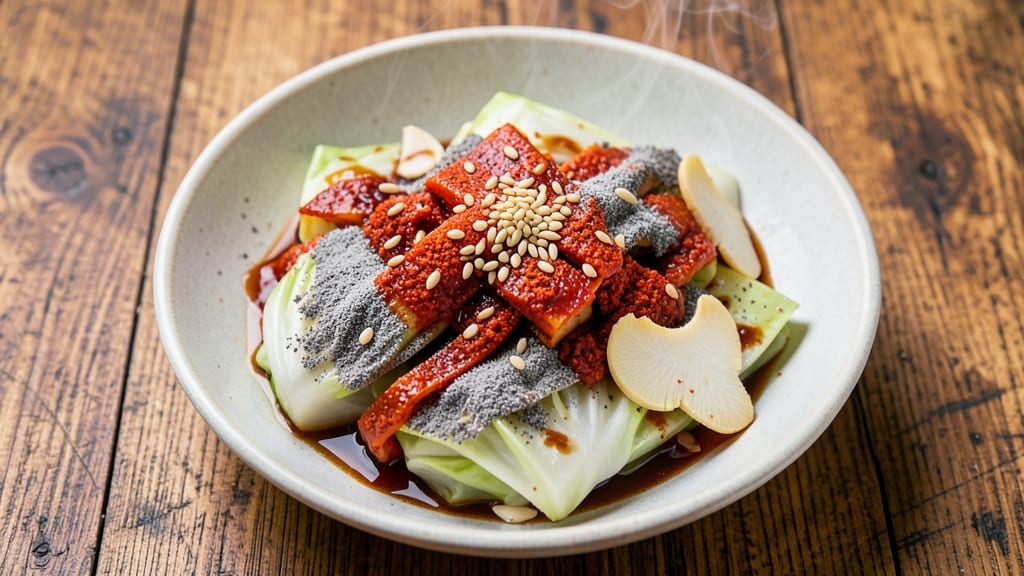
This kimchi recipe without fish sauce delivers the same vibrant heat and umami depth you love, using soy sauce and mushrooms instead. The fermentation process creates a tangy, spicy condiment that's perfect for bowls, tacos, or as a side dish.
I developed this version after realizing how often fish sauce was the limiting factor for vegetarians and those avoiding fermented seafood.
What makes this recipe work is the careful balance of ingredients—napa cabbage, gochugaru (Korean chili flakes), and a mix of soy sauce and mushroom powder for that savory punch. The fermentation time is crucial: 5 days at room temperature builds the perfect tang without overpowering the cabbage's natural crunch.
No special equipment needed beyond a clean jar and a little patience.
By the time you're done, you'll have a batch of kimchi that's bright red, packed with spicy heat, and bursting with fermented flavor. The texture stays crisp even after fermentation, and the aroma alone will transform any meal. This version keeps all the traditional kimchi character while being completely vegetarian-friendly.
Store it in the fridge for up to 3 months, letting the flavors deepen over time. Use it to top rice bowls, stir into fried rice, or serve as a side with grilled meats. The possibilities are endless—just like the satisfaction of making it yourself.
Ingredients for kimchi recipe without fish sauce
Bright red, spicy, and packed with umami—this kimchi skips fish sauce without sacrificing flavor.
| Ingredient | Amount | Notes |
|---|---|---|
| Napa Cabbage 🥬 | 1 lb | Outer leaves removed, quartered lengthwise |
| Gochugaru (Korean Chili Flakes) 🌶️ | ½ cup | Medium or hot variety preferred |
| Soy Sauce 🍶 | ⅓ cup | Light or all-purpose preferred |
| Mushroom Powder 🍄 | 1 tbsp | Dried shiitake or porcini preferred |
| Garlic Cloves 🧄 | 6 cloves | Peeled, roughly chopped |
| Ginger 🧡 | 1 tbsp | Fresh, grated or finely minced |
| Brown Sugar 🍬 | ¼ cup | Light or dark preferred |
| Salt 🧂 | 1 tbsp | Kosher or sea salt preferred |
| Apple Cider Vinegar 🍎 | ¼ cup | For tangy fermentation |
| Sesame Seeds 🌰 | 1 tbsp | Toasted for garnish |
| Sesame Oil 🫒 | 1 tbsp | For finishing |
| Water 💧 | ½ cup | Filtered preferred |
The napa cabbage is the star—look for crisp, vibrant leaves with no yellowing. Asian grocery stores usually have the best selection, but regular supermarkets work too. For the gochugaru, Maesil Chogochu is my go-to brand—it's consistent and medium-spicy, perfect for beginners. If you can't find it, any Korean chili flakes will do, but avoid cayenne or paprika. The garlic and ginger should be fresh—no powdered substitutes here. I always buy extra garlic because it's used in so many things, and it keeps for months in the freezer.
No mushroom powder? Dried shiitake or porcini mushrooms can be ground into a powder yourself—just pulse them in a food processor. Short on sesame seeds? Toasted peanuts or sunflower seeds add a nice crunch. The apple cider vinegar is non-negotiable for that tangy kick—white vinegar works in a pinch, but it's less flavorful. For a sweeter kimchi, bump the brown sugar up to 1/3 cup. If you're worried about fermentation, add 1 tsp of sugar per cup of liquid to encourage the good bacteria. And trust me, the sesame oil at the end is worth it—it ties everything together.
Ferment at room temperature for 5 days, then move to the fridge. It keeps for 3 months and actually gets better over time. I portion mine into small jars so it's ready to grab for meals. The first batch is always the best—subsequent batches might need a little more salt or sugar to balance. Freeze extras in ice cube trays for easy portioning later. This kimchi is magic on everything—rice bowls, sandwiches, even scrambled eggs.
Why You'll Love This Recipe
- No Chopping Nightmare: I’ll be real—this kimchi barely requires a knife. The cabbage just needs a quick rinse and a rough quartering, then the gochugaru and soy sauce do all the work while you’re stirring. My lazy Saturdays just got a flavor upgrade.
- Umami Bomb Combo: That mushroom powder? It’s the secret weapon here—deep, earthy, and so much richer than store-bought kimchi. Pair it with the garlic and gochugaru, and you’ve got a tangy, funky punch that lingers like a good memory. (Yes, even on a Tuesday night.)
- Potluck Hero: Bring this to a gathering, and watch it disappear. It’s bold enough to stand alone as a side but mellows perfectly into fried rice, noodles, or even grilled meats. Honestly, I’ve taken it to three different events this month—everyone asks for the recipe.
- Fridge Magic: Make a big batch, and you’ll thank me later. This kimchi keeps for weeks, getting better as it sits, and costs next to nothing to double. My college budget still praises me for this one—minimal ingredients, maximum payoff. Leftovers? More like future meals.
Step-by-step instructions for fermenting vibrant kimchi
Transform fresh napa cabbage into bold, umami-rich kimchi using this foolproof fermentation method.
Prepare and Salt the Napa Cabbage
Start by removing the outer leaves from the 1 lb napa cabbage and cut it lengthwise into quarters, keeping the core intact. This shape allows the brine to penetrate evenly. In a large bowl, dissolve the 1 tablespoon salt in the 0.5 cup water until fully combined—this creates a strong brine that will soften the cabbage while drawing out impurities.
Gently submerge each cabbage quarter into the brine, massaging the leaves firmly with your hands for about 2 minutes. You'll feel the cabbage begin to soften and release water. Let it sit for 1 hour, turning occasionally, until the leaves are pliable and the brine turns cloudy. Drain thoroughly in a colander, pressing down to remove excess liquid. This step is crucial—it ensures your kimchi ferments properly without becoming waterlogged.
Mix the Umami-Packed Seasoning Paste
In a medium bowl, combine the 0.5 cup gochugaru (korean chili flakes), 0.33 cup soy sauce, 1 tablespoon mushroom powder, 6 cloves roughly chopped garlic, 1 tablespoon finely minced ginger, and 0.25 cup brown sugar. Using your hands or a fork, mix vigorously until you achieve a thick, cohesive paste. The texture should be sticky and well-blended—this ensures even flavor distribution throughout the cabbage.
Here's the thing—don't skip the mushroom powder. It adds deep umami without fish sauce, creating that signature fermented richness. If your gochugaru is particularly dry, add a splash of the 0.25 cup apple cider vinegar to help bind the mixture. The paste should be vibrant red with visible garlic and ginger flecks.
Coat the Cabbage Thoroughly
Working in batches, spread the seasoning paste evenly over the drained cabbage quarters, pressing it between the leaves to ensure complete coverage. Start with the outer leaves and work inward, making sure every surface gets coated. The paste should cling to the cabbage like a second skin—this prevents dry spots and creates that signature kimchi texture.
For the core, gently separate the leaves and spoon paste directly into the center. Pack the cabbage tightly back together so it holds its shape during fermentation. If you notice any dry areas, lightly mist with a tiny bit of the reserved apple cider vinegar to help the paste adhere. This step makes all the difference in flavor development.
Pack and Ferment for Vibrant Heat
Transfer the seasoned cabbage to a clean, airtight glass jar or fermentation vessel, pressing down gently to remove any air pockets. Pour any remaining paste from the bowl over the top, then add the 0.25 cup apple cider vinegar. This acidity helps preserve the kimchi and enhances the tangy flavor profile.
Leave about 1 inch of headspace at the top—kimchi expands as it ferments. Seal the jar and let it ferment at room temperature for 3-5 days, checking daily. You'll see bubbles forming and the kimchi developing its signature sour aroma. After 5 days, transfer to the refrigerator where it will continue fermenting slowly. The longer it ferments, the more complex the flavors become—try it at 1 week for perfect balance of spicy, tangy, and umami notes.
Finish and Store for Maximum Flavor
Before serving, drizzle with 1 tablespoon sesame oil and sprinkle with 1 tablespoon toasted sesame seeds. This adds nutty depth and visual appeal. The kimchi should be vibrant red with slightly softened leaves and a bright, tangy aroma. If you prefer milder heat, remove some of the gochugaru paste before packing, or ferment for a shorter time.
Store in the refrigerator for up to 3 months, though the flavor continues evolving over time. The first few bites will be bright and spicy, but as it ferments further, you'll notice layers of savory complexity developing. This kimchi keeps beautifully—it's perfect for meal prep, stir-fries, or enjoying straight from the jar with rice.
Pro Tips For Making Kimchi Recipe Without Fish Sauce
- Trim the Cabbage Right: Cut the Napa cabbage leaves lengthwise down the core—don’t slice them off. Whole leaves hold their shape better, and you’ll end up with fewer scraps to deal with. I used to strip them like lettuce, but this method keeps the texture intact and makes packing the jar easier.
- Toast the Gochugaru: Dry-toast the gochugaru in a pan over medium heat for 30 seconds—just until it smells deeply spicy, not burnt. This intensifies the flavor and prevents the paste from tasting raw. I learned this the hard way after a batch that lacked punch.
- Salt the Cabbage Overnight: Let the salted cabbage sit in the brine for at least 12 hours—24 is better if you can wait. This isn’t just about softening; it’s about drawing out the bitterness and making the texture crisp. Skipping this step means your kimchi will taste harsh and underdeveloped.
- Blend the Paste Wet: Add a splash of water (about 2 tablespoons) to the garlic, mushroom powder, and soy sauce before blending. This keeps the paste smooth and prevents it from turning into a gritty, uneven mess. I was skeptical until I tried it—now I never blend dry.
Best sauces and condiments for this kimchi recipe without fish sauce
Sesame Oil Finish
Drizzle 1 tablespoon of toasted sesame oil over the finished kimchi right before serving—this adds a nutty, aromatic depth that complements the spicy-savory profile. I like to warm the oil slightly (2 minutes in a small pan over low heat) to release its fragrant compounds.
For extra richness, mix it with ½ teaspoon of toasted sesame seeds before drizzling. This step transforms your kimchi from good to restaurant-quality. 🌰
Gochujang Swirl
For a deeper, more complex flavor, stir 1 tablespoon of gochujang (Korean fermented chili paste) into the seasoning paste before coating the cabbage. Brands like Maesil or Dongwon work perfectly—they add sweetness and a fermented depth that mimics traditional fish sauce umami.
Use half the amount of gochugaru if you add gochujang to balance the flavors. This variation is my go-to when I want extra layers of complexity. 🌶️
Miso Boost
Swap out 1 tablespoon of the soy sauce for 1 tablespoon of white miso paste to introduce a funky, fermented depth. I prefer Awase miso for its balanced sweetness and saltiness.
The miso blends beautifully with the mushroom powder, creating a richer umami profile that stands up to the spicy gochugaru. This works especially well if you're using a milder chili flake variety. 🍶
Kelp Umami
For a seafood-free umami alternative, add 1 teaspoon of finely ground kelp powder (available at health food stores) to the seasoning paste. It mimics the briny depth of fish sauce without any actual seafood.
I've found Seaweed Solutions kelp powder works best—just mix it directly into the paste. This is a game-changer for vegans who want that authentic fermented oceanic flavor. 🌊
Sweet Chili Glaze
Create a quick glaze by mixing 1 tablespoon of honey with 1 teaspoon of rice vinegar and ½ teaspoon of gochugaru. Drizzle this over the finished kimchi for a sweet-spicy contrast that brightens every bite.
This works especially well with the mushroom powder base, as the sweetness balances the funky fermentation notes. I developed this trick after my daughter Lily requested "less spicy" kimchi—now she loves it! 🍯
Garlic-Infused Oil
For an extra flavor punch, infuse 2 tablespoons of olive oil with 4 minced garlic cloves and ½ teaspoon of red pepper flakes by heating gently for 3 minutes. Strain and drizzle over the kimchi before serving.
The garlic oil adds a mellow, aromatic depth that enhances all the other flavors without overpowering them. This is my secret weapon for restaurant-style kimchi at home. 🧄
Nutrition facts
Frequently asked questions
Can I use regular cabbage instead of napa cabbage?
While napa cabbage is traditional, you can substitute green cabbage for a slightly different texture. Use 2 lbs of green cabbage and cut it into 1-inch wedges instead of quarters. The flavor will be similar, but the texture will be firmer. For best results, choose a fresh head with crisp leaves.
How do I adjust the spice level?
For milder kimchi, reduce the gochugaru to 0.25 cup or use ½ teaspoon less per batch. For extra heat, increase to 0.6 cup or add ½ teaspoon of cayenne pepper to the paste. Always taste as you go—fermentation intensifies flavors over time.
What if my kimchi smells bad during fermentation?
If it develops a foul odor (like rotten eggs), it's likely mold or bacterial spoilage. This can happen if the cabbage wasn't properly salted or the jar wasn't clean. Discard it immediately—never taste it. For future batches, ensure all equipment is sanitized and the cabbage is fully submerged in brine.
Can I make this kimchi without mushrooms?
Yes! Replace the mushroom powder with 1 tablespoon of soy sauce + 1 teaspoon of kelp powder for umami, or add 1 extra tablespoon of soy sauce and ½ teaspoon of nutritional yeast. The texture will be slightly less complex, but the flavor will still be rich and satisfying.
How long does it take to ferment at room temperature?
Ferment for 3-5 days at 68-72°F for optimal tang and crunch. If your kitchen is warmer (75°F+), ferment for only 2-3 days to prevent over-fermentation. Check daily—you'll see bubbles and hear a slight "pop" when opening the jar.