
Sauces & Condiments
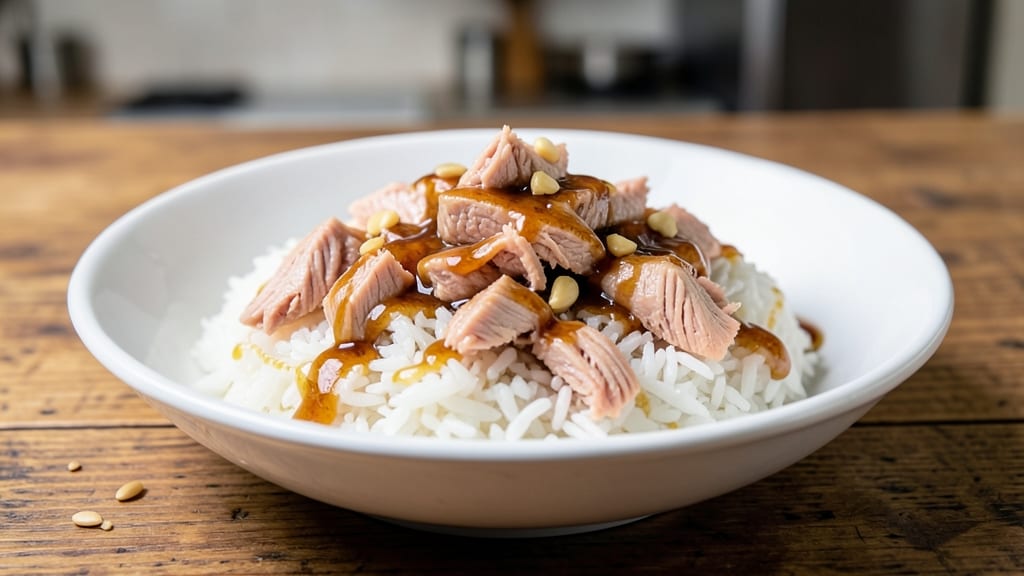
This canned tuna soy sauce recipe turns basic tuna into a savory, 15-minute protein bowl using just a few pantry staples. The secret lies in balancing soy sauce’s deep savoriness with bright acidity and textural contrast—think crisp vegetables, toasted sesame, and perfectly cooked rice.
I developed this recipe after realizing how often canned tuna gets overlooked as a quick, protein-rich base for flavorful meals.
This dish delivers restaurant-quality results without requiring specialty ingredients or techniques. The soy sauce forms the flavor backbone, while a touch of honey or mirin adds subtle sweetness to balance its saltiness.
A quick sauté with garlic and ginger infuses the oil with aromatic depth, and the final garnish of sesame seeds and green onions elevates every bite to feel intentional.
What you’ll end up with is a complete, satisfying meal—fluffy rice topped with tender tuna, crisp vegetables, and a glossy soy-based sauce that ties everything together. The umami richness makes it deeply satisfying, while the bright, fresh garnishes keep it light.
It’s the kind of dish that proves pantry staples can create something unexpectedly elegant.
Serve it as a standalone bowl or pair with steamed greens for extra volume. The beauty of this recipe is its adaptability—swap in different vegetables based on what’s fresh, or add a soft-boiled egg for extra protein. Let’s make this quick, flavorful bowl today.
Ingredients for canned tuna soy sauce
Pantry staples meet restaurant-quality umami in this quick, protein-rich bowl.
| Ingredient | Amount | Notes |
|---|---|---|
| Canned Tuna in Water 🐟 | 2 cans | Drained, high-quality preferred |
| Long-Grain White Rice 🍚 | 1 ½ cups | Uncooked, jasmine or basmati |
| Low-Sodium Soy Sauce 🍶 | ½ cup | Kikkoman preferred for balance |
| Sesame Oil 🫒 | 1 tbsp | Toasted, not flavored |
| Honey 🍯 | 1 tbsp | Light amber preferred |
| Garlic Cloves 🧄 | 3 cloves | Freshly minced, peeled |
| Fresh Ginger 🌿 | 1 tbsp | Finely grated, peeled |
| Red Bell Pepper 🍅 | ½ cup | Diced, seeds removed |
| Green Onions 🧅 | 3 whole | Thinly sliced, white/green parts |
| Toasted Sesame Seeds 🌾 | 1 tbsp | Store-bought or homemade |
| Vegetable Oil 🫒 | 1 tbsp | High smoke point preferred |
| Diamond Crystal Kosher Salt 🧂 | ½ tsp | Adjust to taste |
| Black Pepper 🌶️ | ¼ tsp | Freshly ground preferred |
| Rice Vinegar 🍶 | 1 tbsp | For brightness |
| Mirin 🍶 | 1 tbsp | Optional, for depth |
The tuna quality matters most here—Wild Planet or StarKist in water (not oil) delivers the cleanest flavor. Jasmine rice is ideal for its fragrant, slightly sticky texture, but basmati works too. Soy sauce deserves attention: Kikkoman or Pearl River Bridge strike the perfect balance between saltiness and depth. For the garlic and ginger, freshly grated or minced releases maximum aromatic oils—pre-minced jars lack the same punch. The bell pepper should be firm with vibrant color, not rubbery or dull. Trader Joe's often carries pre-diced peppers in their fresh section, saving prep time.
No sesame oil? Toasted peanut oil at half the amount works in a pinch, though it lacks the nutty depth. Substituting honey? Maple syrup at equal measure, but expect slightly earthier notes. The mirin can be swapped for extra honey plus 1/4 tsp lemon juice to mimic its sweet-savory profile. For the bell pepper, red onion or shredded carrots add contrasting textures. Fresh ginger too strong? Ground ginger at one-third the amount suffices. The rice vinegar is crucial for brightness—substitute lemon juice if unavailable, but reduce to 1 teaspoon to avoid over-acidity.
Rice keeps 3-4 days in the fridge, but reheats best when fresh. The sauce components (soy, honey, vinegar) can be pre-mixed and stored for up to 1 week in an airtight container. For meal prep, portion the sauce separately—it intensifies in flavor when stored. Freeze the tuna mixture without rice for up to 3 months; thaw and reheat gently with a splash of water. Garnishes like sesame seeds and green onions are best added fresh after reheating to preserve their vibrant color and crisp texture.
Why You'll Love This Recipe
- Pantry Powerhouse: I swear by this one when my fridge is bare—just open a can of tuna, dump in rice, and let the soy sauce do the magic. No chopping, no shopping, just done.
- Umami Bomb: That first bite? The soy sauce cuts through the tuna’s richness while honey and sesame oil add a sweet-savory punch—like a tiny flavor explosion in every grain.
- Lunchbox Legend: Pack it cold for work or reheat for dinner—it’s the same meal, twice the convenience. My kids actually ask for leftovers, and honestly? That’s the real win.
- Budget Magic: A single can of tuna stretches to feed four, and the rest of the ingredients cost pennies. I’ve made this for $2 per serving—better than takeout, with zero guilt.
Step-by-step instructions for quick umami-packed protein bowl
This method delivers a perfectly balanced bowl in under 30 minutes—no shortcuts, just efficient technique.
Cook the Long-Grain White Rice to Perfect Al Dente
Rinse the 1.5 cups long-grain white rice under cold water until the water runs clear, swirling gently to remove excess starch. This prevents gummy texture later. Transfer to a pot with 3 cups water and bring to a boil over high heat. Once boiling, reduce to medium-low, cover tightly, and simmer for 15 minutes without lifting the lid.
After 15 minutes, remove from heat and let it steam covered for another 5 minutes. The rice should be tender but still have a slight bite—this is critical for texture. Fluff with a fork and set aside. If using jasmine rice, reduce the total cooking time by 2 minutes to prevent mushiness. The rice should absorb all the water and yield separate grains with minimal sticking.
Prepare the Tuna and Aromatic Sauce Base
In a medium bowl, combine the drained 2 cans canned tuna in water, 0.5 cup low-sodium soy sauce, 1 tbsp sesame oil, 1 tbsp honey, 3 cloves freshly minced garlic cloves, and 1 tbsp finely grated fresh ginger. Mix thoroughly until the tuna is evenly coated with the sauce. The mixture should look glossy and well incorporated—this ensures maximum flavor distribution.
In a separate small bowl, whisk together 1 tbsp rice vinegar, 1 tbsp mirin, and 0.5 tsp diamond crystal kosher salt. This creates the bright, balanced sauce component that prevents the dish from becoming too heavy. Let both mixtures sit at room temperature for 5 minutes while you prepare the vegetables—this allows the flavors to meld slightly before assembly.
Sauté the Vegetables for Crisp-Tender Texture
Heat 1 tbsp vegetable oil in a large skillet over medium-high heat until shimmering. Add the 0.5 cup diced red bell pepper and cook for 3-4 minutes until the edges begin to soften but still retain their shape. Add the 3 whole green onions, sliced into 1-inch pieces, and stir for 30 seconds until they wilt slightly but remain vibrant.
Remove the vegetables from the skillet and set aside. In the same skillet, add the prepared tuna mixture and cook over medium heat for 2-3 minutes, stirring gently. The tuna should heat through completely and develop a slightly glossy sheen from the sauce. The vegetables should be cooked to crisp-tender perfection—firm enough to hold their shape but yielding slightly when pressed with a fork.
Assemble the Protein Bowl with Perfect Layering
Divide the cooked 1.5 cups long-grain white rice evenly among 4 bowls. Spoon the tuna mixture over the rice, spreading it evenly to create a balanced layer. Top with the sautéed red bell pepper and green onions, arranging them attractively on top of the tuna.
Drizzle each bowl with 1 teaspoon of the reserved rice vinegar-mirin mixture and sprinkle with 0.25 teaspoon freshly ground black pepper. Finish with 0.25 tablespoon toasted sesame seeds per bowl, pressing them gently into the top layer. The presentation should be vibrant with contrasting colors—deep red from the bell pepper, green from the onions, and golden sesame seeds.
Serve Immediately for Maximum Freshness
Serve the bowls immediately while the rice is still warm and the vegetables retain their crisp texture. The combination of warm rice, heated tuna mixture, and fresh vegetables creates a perfect temperature contrast that enhances the overall experience. Each bite should deliver a balance of umami from the soy sauce, sweetness from the honey, acidity from the rice vinegar, and a subtle heat from the ginger.
For best results, serve with additional toasted sesame seeds and a side of sliced cucumber or edamame. The dish maintains its quality for up to 2 hours at room temperature, but the texture of the vegetables begins to soften after 30 minutes. This method ensures a restaurant-quality bowl in under 25 minutes of active preparation time.
Pro Tips For Making Canned Tuna Soy Sauce
- Drain and Fluff the Tuna: Canned tuna loses its texture when smothered in juice—drain it well, then break it apart with a fork while still in the can. This keeps it light and easy to mix into the rice later, so it doesn’t turn into a mushy mess.
- Cook Rice Until Just Dry: White rice for this dish should be slightly underdone—pull it off the heat when there’s still a little bite, then let it steam covered for 5 minutes. Overcooking turns it gummy, and you’ll regret it when the soy sauce clings like glue.
- Balance the Soy with Honey Early: Taste the soy sauce first—low-sodium versions can taste flat. Add honey before mixing with rice to temper the saltiness, and adjust while the pan’s still warm. Cold rice hides the balance, and you’ll end up guessing.
- Toast Sesame Oil Last: Sesame oil burns fast—heat the rice and soy mixture first, then fold in the oil at the very end. A splash of hot water (1 tsp) helps disperse it evenly without scorching. This keeps the aroma bright, not bitter.
Perfect pairings for these flavors
Crispy Rice Toppings
Elevate your bowl with crispy fried rice or toasted rice crackers for added texture. I like using Kikkoman Crispy Rice (available in Asian markets) or making my own by lightly frying cooked rice in 1 tbsp sesame oil until golden.
Sprinkle ½ tsp toasted sesame seeds on top for nutty crunch. 🌟
Protein Boosters
Add a soft-boiled egg or crispy tofu for extra protein. Halve a soft-boiled egg and place it on top of the tuna mixture, or pan-fry ½ cup cubed firm tofu in 1 tbsp vegetable oil until golden. Both add richness and balance the dish’s lightness.
Fresh Garnishes
Brighten the bowl with microgreens or shredded nori strips. I use 4 cups baby spinach wilted in the skillet with the bell peppers or ¼ cup thinly sliced cucumber. A sprinkle of fresh cilantro or shiso leaves adds herbal freshness that cuts through the soy sauce’s depth.
Spicy Kick Options
For heat lovers, add 1 tsp sriracha or ½ tsp gochujang to the tuna sauce. I also like drizzling 1 tsp chili crisp (like Laoganma) over the top for smoky-spicy contrast. A pinch of red pepper flakes finishes with a subtle burn. 🌶️
Warm Bread Pairing
Serve with steamed mantou buns or garlic naan to soak up any extra sauce. I toast 4 small mantou buns in a skillet with ½ tbsp butter until golden for a perfect crunchy contrast. The warm bread adds a comforting element to the light bowl.
Dipping Sauces
Offer a spicy mayo or yuzu kosher for dipping. Mix 2 tbsp mayonnaise with 1 tsp sriracha and ½ tsp honey for a creamy kick. For a tangy option, whisk 1 tbsp rice vinegar with 1 tsp soy sauce and ½ tsp grated daikon.
Both sauces enhance the bowl’s flavors. 🍶
Nutrition facts
Frequently asked questions
Can I use canned tuna in oil instead of water?
The recipe specifies water-packed tuna for its cleaner flavor profile, but oil-packed works too! Just drain and pat the tuna dry to remove excess oil, then proceed with the recipe. The texture will be slightly richer, but the soy sauce will still balance any extra fat. For best results, use high-quality oil-packed tuna like Wild Planet to avoid a greasy texture.
What if I don’t have mirin? Can I substitute something?
Mirin adds sweetness and depth, but you can substitute it with a mix of 1 tbsp honey and ¼ tsp lemon juice. Alternatively, use 1 tbsp dry white wine or 1 tsp sugar dissolved in 1 tbsp water. The dish will still taste balanced, though mirin’s unique umami will be missed.
How do I make this dish spicier?
For extra heat, add ½ tsp gochujang or 1 tsp sriracha to the tuna sauce mixture. Stir well before combining with the tuna. For a smoky kick, drizzle 1 tsp chili crisp (like Laoganma) over the top after assembly. Garnish with extra red pepper flakes for a subtle burn.
Can I meal prep this recipe?
Yes, but store the components separately to maintain texture. Cook the rice and refrigerate for up to 4 days. Keep the tuna sauce mixture (without rice) in an airtight container for 3 days, and store the sautéed vegetables separately. Reheat gently in a skillet or microwave, then assemble fresh. Add garnishes like sesame seeds and green onions just before serving.
What’s the best way to crisp up the vegetables?
For extra-crisp vegetables, blanch the bell pepper and green onions in boiling water for 30 seconds, then shock in ice water. Pat dry and sauté in 1 tbsp sesame oil over high heat for 1-2 minutes until blistered. This method locks in crunch even after reheating.