Sauces & Condiments
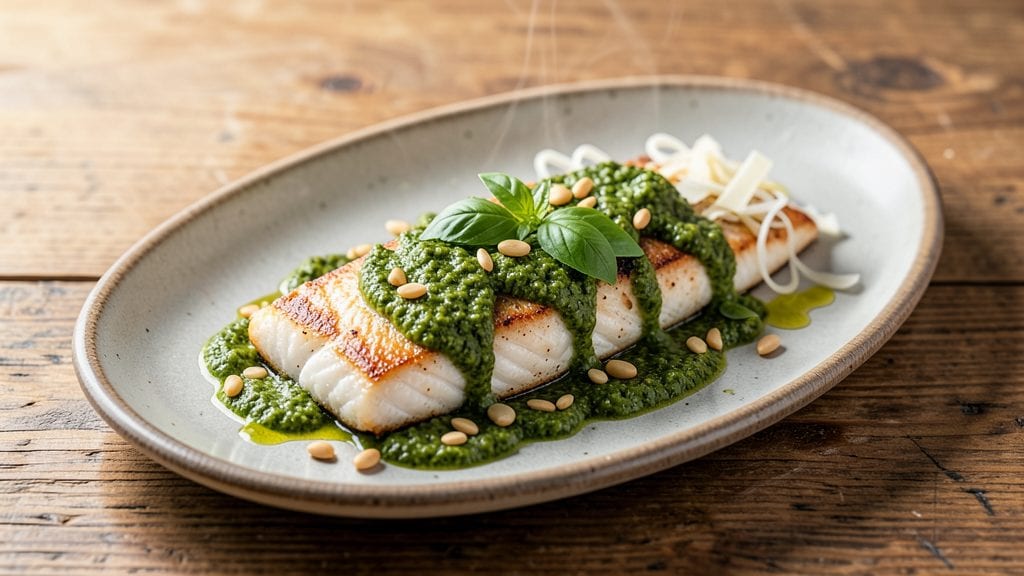
This fish with pesto sauce recipe delivers restaurant-quality results with minimal effort—crispy pan-seared fillets paired with vibrant basil pesto that transforms simple weeknight dinners into elegant meals.
The secret lies in a precise searing technique that creates a golden crust while keeping the fish perfectly tender inside, all balanced by a fresh, herby pesto that cuts through the richness.
I developed this method after years of testing, ensuring the sauce doesn't overpower the delicate fish but instead enhances its natural flavor with bright, aromatic notes.
The pesto here isn't your typical thick paste—it's a lighter, more fluid sauce designed to coat the fish evenly without weighing it down. Fresh basil, garlic, pine nuts, and parmesan combine with just enough olive oil to create a vibrant green sauce that's tangy, nutty, and deeply flavorful.
Meanwhile, the fish—whether white fish like cod or salmon—develops a crispy exterior and stays moist thanks to a simple seasoning blend and careful timing in the pan. This recipe proves that homemade meals can rival restaurant quality.
What you'll achieve is a dish that's both impressive and effortless: perfectly crispy fish fillets topped with a glossy, basil-infused pesto that glistens under the light.
The contrast between the golden crust of the fish and the vibrant green sauce makes every bite visually appealing, while the flavors balance perfectly—herby, slightly tangy, and rich without being heavy.
This is the kind of meal that feels special enough for guests but simple enough for any night of the week.
Serve with a side of roasted asparagus or a fresh arugula salad to complete the meal, and don't forget crusty bread for soaking up any extra pesto. The instructions below walk you through every step, from preparing the pesto to searing the fish to perfect doneness.
Let's get started on creating this basil-infused, crispy pan-seared perfection.
Ingredients for fish with pesto sauce
Fresh fish and vibrant basil create restaurant-quality pesto-perfected fillets with crispy sears.
| Ingredient | Amount | Notes |
|---|---|---|
| White Fish Fillets 🐟 | 1 ½ lb | Cod, halibut, or salmon preferred |
| Extra-Virgin Olive Oil 🫒 | ½ cup | High quality, fruity variety |
| Fresh Basil Leaves 🌿 | 2 cups | Packed, stems removed |
| Pine Nuts 🥜 | ½ cup | Toasted for richness |
| Garlic Cloves 🧄 | 3 cloves | Peeled, rough chopped |
| Parmesan Cheese 🧀 | ¾ cup | Freshly grated from block |
| Lemon Juice 🍋 | 2 tbsp | Freshly squeezed |
| Sea Salt 🧂 | 1 tsp | Fine grain preferred |
| Ground Black Pepper 🌶️ | ½ tsp | Freshly ground preferred |
| All-Purpose Flour 🌾 | 2 tbsp | For dredging fish |
| Unsalted Butter 🧈 | 2 tbsp | Cold, for searing |
| Fresh Lemon Zest 🍋 | 1 tsp | Fine, for garnish |
| Fresh Parsley 🌿 | ¼ cup | Chopped, for garnish |
The fish quality makes all the difference here. Whole Foods Market or your local seafood counter are best for freshness—look for fillets with bright, translucent flesh and minimal odor. Salmon or cod work perfectly, but avoid anything with a strong fishy smell. For the pesto, Trader Joe's has the best pine nuts at reasonable prices, but walnuts or cashews work in a pinch. The Parmesan should be real Parmigiano-Reggiano—none of that pre-grated stuff. If you can't find it, Parmigiano Reggiano from Costco is a solid backup. Fresh basil is non-negotiable for that vibrant green color and bright flavor—skip the dried or you'll regret it.
No pine nuts? Walnuts or cashews work beautifully—they're cheaper and still pack great flavor. Running low on Parmesan? Pecorino Romano has a sharper bite that complements the fish perfectly. The lemon juice can be substituted with white wine vinegar at half the amount if you're out, but fresh is always better. For the fish, if you can't find fresh fillets, high-quality frozen fillets work too—just thaw them properly in the fridge. The butter for searing? European-style unsalted butter like Plugra has a higher fat content, which gives you that perfect crispy crust. No butter? Olive oil works too, though the flavor will be slightly different.
Store the pesto ingredients separately until ready to use—basil wilts fast, so keep it wrapped in damp paper towels in a sealed container for up to 3 days. The fish should be used within 2 days of purchase for best texture. Once you've made the pesto, it keeps for 1 week in the fridge if you cover it with a thin layer of olive oil. The cooked fish reheats beautifully—just warm in a skillet with a splash of water for 2-3 minutes. For meal prep, portion the pesto into ice cube trays and freeze—perfect for quick garnishes later.
Why You'll Love This Recipe
- One-Pan Magic: I swear by this for nights when I’d rather not wash a million dishes—just toss the fish and pesto on a sheet pan, bake, and call it a day. The basil and garlic melt into the olive oil while the pine nuts toast right alongside, and suddenly, you’ve got a restaurant-worthy dish with zero fuss.
- Herb Bomb Flavor: That fresh basil-pine nut pesto? It’s the star. The garlic gets sweet and golden from the olive oil, the basil brightens everything up, and the pine nuts add this nutty crunch that makes you want to lick the plate. Honestly, the first time I tasted it, I nearly skipped dinner to eat it straight from the pan.
- Weeknight to Weekend: Between us, this recipe works for everything. Toss it together for a lazy Tuesday, serve it over pasta for a date night, or bring it to a potluck where no one will guess how little effort it took. The fish stays tender, the sauce clings perfectly, and it’s always a crowd-pleaser—no matter the occasion.
- Leftovers Win: I make this twice a week because the leftovers are that good. The pesto sauce keeps the fish moist, so it reheats beautifully—just a quick zap in the microwave or a stovetop sizzle. And since the ingredients are simple (and affordable), you’re not breaking the bank for a meal that feels like a splurge. My wallet and my taste buds thank me.
Step-by-step instructions for basil-infused crispy pan-seared fish
Here's how to achieve perfectly crispy fish with a vibrant homemade pesto sauce every time.
Prepare the Homemade Pesto
In a food processor, combine the 2 cups of fresh basil leaves, 0.5 cup of pine nuts, 3 cloves of peeled garlic, and 1 tsp of sea salt. Pulse until the pine nuts are finely chopped but not fully ground. With the processor running, slowly drizzle in the 0.5 cup of extra-virgin olive oil until the mixture forms a smooth paste.
Transfer the pesto to a bowl and stir in the 0.75 cup of freshly grated parmesan cheese and 2 tbsp of lemon juice. Taste and adjust seasoning with additional salt or pepper if needed. This homemade pesto will have a brighter, fresher flavor than store-bought versions. Cover and set aside until ready to use.
Season and Dredge the Fish Fillets
Pat the 1.5 lb of white fish fillets dry with paper towels—this is crucial for achieving crispy skin. Season both sides generously with sea salt and ground black pepper. Place the 2 tbsp of all-purpose flour in a shallow dish and lightly dredge each fillet, shaking off any excess flour.
I like to press down gently on the fillets during the first minute of cooking—this prevents them from curling and ensures even contact with the pan. The light flour coating creates a delicate crust that seals in moisture while providing texture.
Sear the Fish to Perfect Crispiness
Heat a large skillet over medium-high heat until hot. Add the 2 tbsp of cold unsalted butter and allow it to melt and foam. Place the fish fillets in the skillet, skin-side down, and cook for 3-4 minutes until the skin is golden brown and crispy. You'll know it's ready when the edges lift easily from the pan.
Carefully flip the fillets and cook for another 2-3 minutes until the fish is opaque throughout and flakes easily with a fork. Remove the fish from the skillet and set aside on a warm plate. Keep the pan on low heat for now—we'll use it for the sauce.
Finish with Lemon and Pesto Sauce
Return the skillet to medium heat and add the prepared pesto sauce. Stir for 1-2 minutes until it's warmed through and slightly thickened. Add the 1 tsp of fresh lemon zest and stir to combine. The sauce should coat the back of a spoon with a vibrant green color.
Gently spoon the pesto sauce over the cooked fish fillets, making sure each piece is well coated. Garnish with the 0.25 cup of chopped fresh parsley for a pop of color and freshness. Serve immediately while the fish is still warm and the sauce is glossy.
Plate and Serve with Confidence
Transfer the fish to warm serving plates, arranging each fillet with the crispy skin facing up. Spoon any remaining sauce from the skillet over the top. The combination of crispy skin, tender fish, and vibrant pesto creates a perfect balance of textures and flavors.
This dish delivers on the promises of crispy perfection and basil-infused richness. The homemade pesto elevates simple fish into an impressive meal that's perfect for weeknight dinners or special occasions. Serve with a side of crusty bread to soak up any extra sauce.
Pro Tips For Making Fish With Pesto Sauce
- Pat the fish dry: Fish with pesto sauce needs a good sear, and damp skin ruins that. Grab paper towels and press firmly—don’t just wipe—so the olive oil grips the surface instead of hissing away. Wet skin equals sad, steamed fish.
- Toast pine nuts first: I learned this the hard way—raw pine nuts in pesto taste bland and bitter. Pulse them in a dry pan over medium-low heat for 30 seconds until golden, then immediately add them to the basil. They’ll release their nutty aroma and stay crisp, not mushy.
- Use room-temperature garlic: Cold garlic cloves from the fridge turn to butter in pesto, making it greasy. Chop them 10 minutes before mixing and let them sit on the counter. Warm garlic blends smoother and doesn’t overwhelm the basil’s freshness.
- Cook fish skin-side down: If your fillets have skin, leave it on—it crisps into a flavor shield. Place them skin-side down in the pan first, then add a splash of olive oil. After 3 minutes, flip gently with a fish spatula; the skin will hold together, not flake apart.
Pro cooking tips for fish with pesto sauce
Pesto Consistency Tricks
For a perfectly balanced pesto that coats the fish without overwhelming it, pulse the basil, pine nuts, and garlic in your food processor until the mixture resembles coarse sand—not a fine paste. This texture ensures the sauce clings beautifully to the fish while still delivering vibrant flavor.
I use a Ninja BN601 food processor because it handles the nuts without over-processing them into a greasy mess. 💛
Fish Skin Secrets
The key to crispy skin lies in patting the fillets completely dry with paper towels before seasoning. Any moisture left on the surface will steam instead of crisp, ruining that golden crust. For extra insurance, I like to press the fillets gently with a second paper towel.
Also, never skip the flour dredge—it creates a delicate barrier that locks in moisture while adding texture.
Butter Temperature Control
Cold butter is your secret weapon for that perfect sear. When you add the butter to the hot pan, it should foam and sizzle dramatically—this means it's ready for the fish.
If it's smoking excessively, reduce the heat slightly. I use European-style unsalted butter like Plugra because its higher fat content creates a richer, more stable crust. 🔥
Pesto Sauce Finish
Warming the pesto in the same skillet where you cooked the fish infuses it with subtle fishy notes that make the sauce taste even more cohesive. Stir in the lemon zest at the very end—this brightens the flavors and prevents the sauce from becoming too heavy.
For an extra touch, I drizzle a thin layer of olive oil over the pesto before serving to keep it glossy and prevent drying.
Timing the Flip
Fish is done when it flakes easily with a fork but still looks slightly translucent in the center. For most fillets, this takes 3-4 minutes per side on medium-high heat. I use a meat thermometer to check the internal temperature—it should reach 145°F at the thickest part.
The moment the edges lift easily from the pan is your cue to flip, ensuring an even cook every time. ⏰
Sauce Thickness Adjustments
If your pesto seems too thick after warming, thin it with 1-2 teaspoons of warm water or fish stock while stirring. For a richer texture, add a splash of lemon juice or a pinch of red pepper flakes to balance the flavors.
I always taste the sauce before serving—this ensures it complements the fish perfectly without overpowering it. The goal is a sauce that's smooth, vibrant, and just thick enough to coat a spoon.
Nutrition facts
Frequently asked questions
Can I use store-bought pesto instead of homemade?
Store-bought pesto works in a pinch, but homemade makes all the difference! Fresh basil and toasted pine nuts give a brighter, more vibrant flavor that pairs perfectly with the fish. If using store-bought, choose one with minimal additives and thin it with a splash of olive oil to achieve the right consistency for coating.
What's the best fish to use with this pesto sauce?
White fish like cod, halibut, or salmon work beautifully—they're mild enough to let the pesto shine. Avoid strong-flavored fish like tuna or swordfish, as they can compete with the basil's brightness. For extra crispiness, opt for fillets with skin, like salmon or trout.
How do I prevent the fish from sticking to the pan?
Pat the fillets completely dry before seasoning—this is key! Also, make sure your skillet is hot enough (it should sizzle when you add the butter) and avoid overcrowding the pan. A light flour dredge creates a natural barrier that prevents sticking while adding texture.
Can I make this recipe ahead of time?
The pesto can be made up to 3 days ahead and stored in the fridge, covered with olive oil. However, cook the fish fresh—it's best served immediately after searing for that perfect crispy texture. If reheating, warm gently in a skillet with a splash of water for just 1-2 minutes.
What if my pesto turns out too thick?
Thin it with 1-2 teaspoons of warm water, olive oil, or even a splash of lemon juice while stirring. For extra richness, add a pinch of red pepper flakes or more parmesan. The goal is a sauce that coats the back of a spoon smoothly—just thick enough to cling to the fish without drowning it.