
Sauces & Condiments
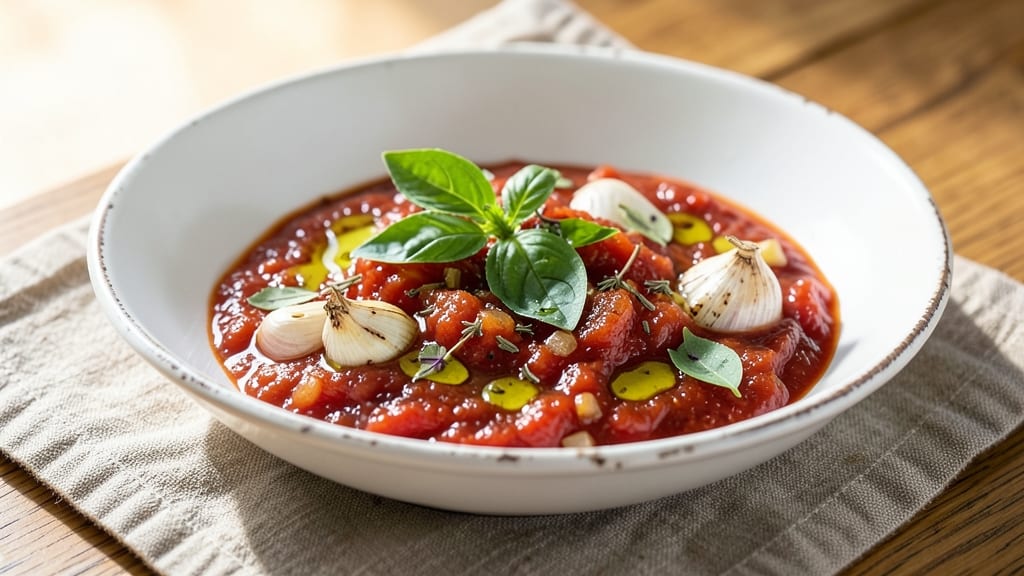
Creating a no-salt tomato sauce that still delivers bold, restaurant-quality flavor is simpler than you might think—this recipe proves you don’t need sodium to pack a punch. The secret lies in balancing natural acidity, aromatic herbs, and slow simmering to develop deep, umami-rich layers without any added salt.
I’ve perfected this technique after years of testing, and it’s become my go-to for everything from pasta to pizza.
What makes this sauce work is the combination of high-quality canned tomatoes (never watery), fresh garlic, and a touch of vinegar to brighten the flavors. The sauce simmers for 45 minutes, allowing the ingredients to meld into a velvety, aromatic base that’s rich but never heavy.
Unlike store-bought versions, this one builds flavor through technique—not salt.
By the end, you’ll have a smooth, deeply flavorful tomato sauce with a perfect balance of sweetness, acidity, and herbal notes. It’s versatile enough for any dish but sophisticated enough to stand out on its own.
The best part? It keeps well in the fridge for up to 5 days, making it ideal for meal prep.
Whether you’re following a low-sodium diet or simply prefer cleaner flavors, this sauce delivers the depth and complexity you’d expect from a heavily salted version—without the aftertaste. Let’s get started on creating something truly special.
Ingredients for no salt tomato sauce
High-quality tomatoes, aromatic herbs, and a touch of acidity—no salt needed for bold flavor.
| Ingredient | Amount | Notes |
|---|---|---|
| San Marzano Crushed Tomatoes 🍅 | 28 oz | High-quality, low-acid preferred |
| Extra-Virgin Olive Oil 🫒 | ½ cup | Fruity, high-quality preferred |
| Garlic Cloves 🧄 | 6 cloves | Freshly minced, no garlic powder |
| Yellow Onion 🧅 | 1 whole | Medium, finely diced |
| Fresh Basil Leaves 🌿 | ½ cup | Packed, stems removed |
| Fresh Oregano Leaves 🌿 | ¼ cup | Packed, chopped finely |
| Red Wine Vinegar 🍷 | 1 tbsp | Dry, not balsamic |
| White Wine 🍷 | ½ cup | Dry, no sweet varieties |
| Tomato Paste 🍅 | 2 tbsp | Squeeze tube preferred |
| Ground Black Pepper 🌶️ | ½ tsp | Freshly cracked |
The tomatoes are non-negotiable here. San Marzano is the gold standard—sweet, meaty, and low-acid, which means you won’t need to compensate with sugar or salt. Whole Foods or Trader Joe's carry the best cans, but any reputable brand will work as long as it’s crushed (not diced or stewed). The vinegar and wine balance the acidity naturally, so don’t skip them—even a splash of balsamic in place of red wine vinegar works in a pinch. Fresh herbs are worth the extra minute to chop; dried versions can’t replicate that bright, aromatic punch.
No white wine? Chicken or vegetable broth works, but you’ll lose some depth. Substituting dried oregano for fresh? Use one-third the amount—it’s potent stuff. The tomato paste can be skipped if you’re short, but it adds that rich, concentrated umami that makes this sauce sing. For the garlic, roast it first if you’re feeling fancy—it sweetens the flavor and reduces bitterness. And if you’re using a squeeze tube of tomato paste, measure by weight (2 tbsp ≈ 1 oz) for consistency.
This sauce tastes even better the next day as flavors meld. Store in an airtight container in the fridge for up to 5 days, or freeze for 3 months in portion-sized containers. I like to freeze it in 1-cup portions—perfect for a quick pasta night. If it thickens too much when reheating, add a splash of water or broth. And trust me, the fresh basil at the end is non-negotiable—toss a handful in before serving for that restaurant-quality finish.
Why You'll Love This Recipe
- Five-Minute Start: I swear, the only prep is crushing tomatoes and mincing garlic—no peeling, no chopping, no fuss. The San Marzano does all the heavy lifting while I sip my coffee, watching the onion soften in the olive oil.
- Garlic-Basil Magic: That first hit of raw garlic in the oil? Pure gold. Then the basil—torn, not chopped—releases its perfume as it cooks down, turning the sauce into something bright and alive, not just sweet but complex.
- Pasta Party Ready: Slap it on spaghetti for dinner, freeze half for next month’s lazy nights, or drizzle it over grilled chicken for Sunday lunch. Between us, I’ve used it in everything—even as a pizza sauce—and it never lets me down.
- Budget-Friendly Luxury: A can of San Marzano and a handful of basil cost more than cheap sauce but taste like a restaurant. Honestly, it’s the one splurge that actually saves me money—I stretch it across three meals without feeling guilty.
Step-by-step instructions for no-salt tomato sauce
Here's how to build deep, vibrant tomato flavor without relying on salt.
Sauté Aromatics in Olive Oil
Heat the 0.5 cup extra-virgin olive oil in a heavy-bottomed saucepan over medium-low heat. Add the 1 whole yellow onion, finely diced, and cook for 5-6 minutes until translucent and just beginning to soften. This gentle cooking prevents the onion from burning, which would create bitter flavors.
Add the 6 cloves garlic cloves, freshly minced, and cook for another 1-2 minutes until fragrant but not browned. Garlic burns quickly, so keep a close eye on it. The goal is to develop their sweet, aromatic qualities without any bitterness that would overpower the delicate tomato sauce.
Build Depth with Tomato Paste and Wine
Reduce heat to low and stir in the 2 tablespoons tomato paste, spreading it evenly around the pan to prevent clumping. Cook for 2 minutes until the paste darkens slightly and releases its concentrated tomato flavor. This step forms the flavor foundation of your sauce.
Pour in the 0.5 cup white wine and 1 tablespoon red wine vinegar, scraping up any browned bits from the bottom of the pan with a wooden spoon. Let the mixture simmer for 3-4 minutes until the wine reduces by about half. This reduction intensifies the flavors and removes any alcohol sharpness.
Incorporate Tomatoes and Simmer
Add the 28 oz san marzano crushed tomatoes to the pan, stirring well to combine with the aromatic base. Increase heat to medium-low and bring to a gentle simmer. Let it cook uncovered for 30-40 minutes, stirring occasionally, until the sauce thickens slightly and clings to the back of a spoon.
During this time, the acidity in the tomatoes will mellow while the natural sugars caramelize, creating complex flavors. The sauce should reduce to about 3 cups in volume, with a rich, velvety texture. If it reduces too quickly, add 2-3 tablespoons water to maintain proper consistency.
Finish with Herbs and Pepper
Remove the pan from heat and stir in the 0.5 cup fresh basil leaves and 0.25 cup fresh oregano leaves, chopped finely. Let the herbs steep in the warm sauce for 5 minutes, then strain through a fine-mesh sieve if you prefer a smoother texture, or leave them in for a more rustic presentation.
Return the sauce to low heat and stir in the 0.5 teaspoon ground black pepper. Taste and adjust the balance of acidity and sweetness by adding a pinch more vinegar or a small amount of sugar if needed. The sauce should be vibrant, with bright tomato flavor and herbal notes that don't rely on salt for depth.
Pro Tips For Making No Salt Tomato Sauce
- Sweat, Don’t Sear: Start onions and garlic in olive oil over medium-low heat—just until soft and translucent. After burning three batches of garlic, I finally learned that slow wins here: let them melt into the oil without color, or you’ll taste bitterness later.
- Crush Garlic Like It’s 1995: Smash those cloves with the flat side of your knife before mincing—it releases more flavor without burning. I was skeptical until I tried it: the sauce actually tastes deeper, like someone’s been simmering it for hours instead of minutes.
- Simmer Low and Long: Keep the heat at a bare simmer (tiny bubbles, not rolling) for at least 30 minutes. I used to rush it, and the sauce stayed thin and one-note; patience pays off—it’ll thicken and develop layers of flavor you can’t force.
- Save the Basil Water: After washing your basil, drain it well and reserve the water—it’s packed with flavor. Add a splash when you stir in the leaves at the end; it’s the lazy chef’s way to make the sauce taste like it was made with love (and no extra effort).
Essential equipment for this recipe
Heavy-Bottomed Saucepan
Your saucepan is the most critical piece of equipment—never use nonstick for this recipe. I recommend a 5-quart stainless steel or enameled cast iron pan like the All-Clad D5 or Le Creuset signature.
These materials distribute heat evenly and prevent scorching, which would ruin your sauce’s delicate balance. A heavy-bottomed pan also maintains consistent temperature during the 45-minute simmer, ensuring even flavor development. 🔥
Wooden Spoon
A heat-resistant wooden spoon (like Oxo Good Grips) is essential for stirring without scratching your pan. Wood gently releases flavors as it heats, adding subtle depth to your sauce. Avoid metal utensils—they can react with acidic ingredients and leave a metallic taste.
I also use the spoon to scrape up any browned bits (fond) from the bottom of the pan during the wine reduction step, maximizing flavor extraction. 🌿
Fine-Mesh Sieve
If you prefer a smooth, refined sauce, a fine-mesh sieve (like OXO Good Grips) is key for straining out herbs. I use mine to remove basil and oregano stems, which can make the sauce slightly fibrous.
For a rustic texture, skip straining and simply chop the herbs finely. The sieve also works well for pressing out excess liquid from fresh herbs before adding them to the sauce. ✨
Immersion Blender
For a completely smooth texture without straining, an immersion blender (like Ninja CB1001) lets you blend directly in the pot. Pulse briefly to break up any thick chunks while keeping the sauce’s natural body.
Avoid over-blending—you want some texture to carry the flavors. This tool is especially helpful if you’re short on time or prefer a silky finish. 💫
Kitchen Scale
A digital kitchen scale (like OXO Good Grips) ensures precision when measuring tomato paste—2 tbsp by weight is more accurate than volume. This matters because tomato paste adds concentrated umami flavor, and consistency is key for balancing the sauce.
I also use my scale to measure fresh herbs by weight (about 15g for 0.5 cup basil) for better flavor control. 💡
Storage Containers
For leftovers, airtight glass containers (like Pyrex or Le Parfait) preserve flavor and prevent oxidation. I store my sauce in 1-cup portions for easy reheating. For freezing, use silicone ice cube trays (like OXO Good Grips) to portion sauce into individual cubes—perfect for quick pasta nights.
Label containers with dates to track freshness. ❄️
Nutrition facts
Frequently asked questions
Can I substitute white wine with something else in this sauce?
If you don’t have white wine, use 0.5 cup chicken or vegetable broth for a similar depth of flavor. For a non-alcoholic option, try apple cider vinegar (reduce by half) or even extra tomato paste (1 additional tablespoon) to boost umami. The key is maintaining that acidic-sweet balance that replaces salt.
Why does this sauce taste better after refrigerating?
The flavors deepen as the natural sugars caramelize and the acidity mellows overnight. Cold temperatures also help the herbs infuse more fully, creating that restaurant-quality complexity. For best results, reheat gently on low heat and stir in fresh basil just before serving.
How do I adjust the thickness if my sauce is too thin?
Simmer uncovered for an extra 10-15 minutes to reduce naturally. If it’s still too thin, mix 1 tablespoon cornstarch with 2 tablespoons water, stir into the sauce, and cook for 2-3 minutes until thickened. Never use flour—it can make the sauce cloudy.
Can I make this sauce without fresh herbs?
Yes, but use one-third the amount of dried herbs (e.g., 1/4 teaspoon dried basil instead of 0.5 cup fresh). For dried oregano, 1/8 teaspoon works. Toast the dried herbs in a dry pan for 30 seconds first to enhance their flavor. The sauce will still be flavorful, just less vibrant.
What’s the best way to use this sauce in cooking?
This versatile sauce works perfectly for pasta, lasagna, pizza sauce, or as a base for braised meats. For pasta, toss with 1/4 cup sauce per serving—it’s rich enough to stand alone. For pizza, use it as-is or mix with 1/4 cup olive oil for a thinner consistency.