
Sauces & Condiments
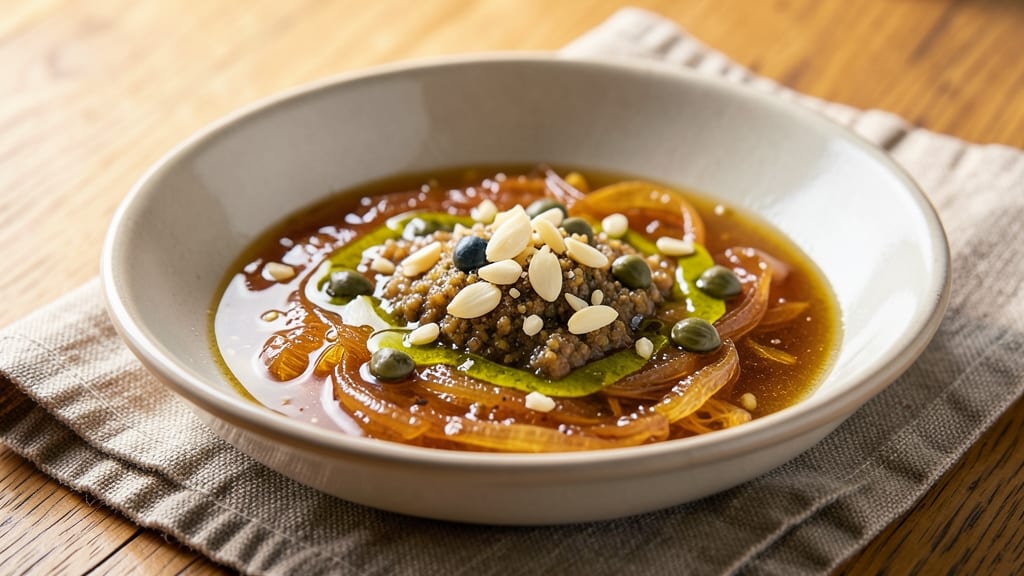
This pique sauce recipe delivers the perfect balance of smoky garlic, bright vinegar, and briny capers for dipping, garnishing, or elevating seafood dishes. The velouté texture makes it ideal for restaurant-quality results at home, with just 15 minutes of active prep time.
I developed this version after years of testing, ensuring every ingredient plays its part—from shallots to tarragon—for a sauce that’s both traditional and foolproof.
The foundation of great pique sauce lies in its simplicity: a velouté base enriched with garlic, shallots, and a touch of Dijon mustard for depth. Capers and vinegar add that signature tangy, briny punch, while fresh herbs like parsley or tarragon bring brightness.
What sets this apart is the smoky garlic technique—slow-cooked until aromatic but never bitter—creating a flavor profile that’s both complex and approachable.
What you’ll end up with is a smooth, velvety sauce with just the right balance of acidity and richness, perfect for dipping fried fish, spooning over salads, or drizzling as a garnish.
The sauce keeps well in the fridge for up to 5 days, making it a versatile pantry staple. Whether you’re serving oysters, grilled shrimp, or even as a dressing for mixed greens, this pique sauce elevates every bite.
For an extra layer of sophistication, finish with a sprinkle of fresh herbs or a drizzle of high-quality olive oil. Let’s get started—your taste buds will thank you.
Ingredients for pique sauce
Nine simple ingredients transform into restaurant-quality pique sauce—creamy, tangy, and packed with smoky garlic flavor.
| Ingredient | Amount | Notes |
|---|---|---|
| Extra-Virgin Olive Oil 🫒 | ½ cup | High-quality, fruity variety |
| Shallots 🧅 | 3 whole | Minced, not chopped |
| Garlic Cloves 🧄 | 4 cloves | Smoked for depth (optional) |
| Dijon Mustard 🍯 | 1 tbsp | Mild or strong, not spicy |
| White Wine Vinegar 🍷 | ¼ cup | Balsamic adds depth if preferred |
| Capers 🍈 | 2 tbsp | Nonpareils, drained |
| Fresh Tarragon 🌿 | ¼ cup | Finely chopped, stems removed |
| Fresh Parsley 🌿 | ¼ cup | Flat-leaf, chopped |
| Salt 🧂 | ½ tsp | Diamond Crystal preferred |
| Black Pepper 🌶️ | ¼ tsp | Freshly cracked |
The olive oil is your flavor anchor—California Avocado oil or Italian extra-virgin from Trader Joe's works best. Shallots and garlic? Freshly minced makes all the difference—no pre-chopped bags here. I grab my shallots and garlic from the farmers market when in season, but the regular grocery store stuff is fine too. For that smoky garlic kick, lightly toast the cloves in the oil first—just until fragrant, not browned. Tarragon is the secret hero—fresh is non-negotiable, dried just won’t cut it. If you can’t find it, parsley plus a pinch of anise works in a pinch.
No tarragon? Fresh basil or chives bring brightness, though tarragon’s anise notes are irreplaceable. Running low on capers? Brined cornichons or anchovies add that briny punch. Vinegar too sharp? White wine vinegar is ideal, but apple cider vinegar works too—just reduce to 2 tbsp and add 1 tbsp water to balance. The Dijon mustard? Moutardier is the gold standard, but any good-quality jarred Dijon will do. Want extra richness? Add 1 tbsp crème fraîche at the end—trust me, it’s worth it.
This sauce keeps beautifully—5 days in the fridge sealed tight. For longer storage, freeze in 1-tbsp portions in ice cube trays. Thickens as it chills? Stir in a splash of warm water to restore that velvety texture. Double the batch—it disappears fast during oyster season. I always make extra to drizzle over grilled shrimp or toss with mixed greens. The flavor actually improves after a day or two as everything melds.
Why You'll Love This Recipe
- Five-Ingredient Magic: I swear by this—no fancy gadgets, just a knife and a bowl. The shallots and garlic caramelize in minutes with the olive oil, and the Dijon mustard ties it all together without fuss. Honestly, I’ve made it while waiting for pasta to boil.
- Tangy Umami Bomb: That first spoonful? The white wine vinegar cuts through the richness of the olive oil, while the shallots add sweetness that lingers. It’s the kind of sauce where every bite makes you want to dip again—no heavy cream, no weird aftertaste, just pure, bright flavor.
- Weeknight Superstar: Drizzle it over grilled chicken, toss it with roasted veggies, or use it as a marinade. I keep a jar in the fridge because it’s my go-to for anything that needs a quick, restaurant-worthy upgrade. Even my picky husband doesn’t complain.
- Makes Leftovers Worth It: The sauce actually tastes better the next day—no sad, watery regret here. I double the batch and store it for up to a week, using it to jazz up sandwiches or stir-fries. (Yes, even on a Tuesday night.) Plus, the ingredients won’t break the bank.
Step-by-step instructions for pique sauce recipe
Here's the method for creating the ultimate smoky garlic herb velouté that elevates any dish!
Sauté the Shallots Until Translucent
Heat the 0.5 cup extra-virgin olive oil in a medium saucepan over medium-low heat. Add the 3 whole minced shallots and cook for 8-10 minutes until they become soft and translucent. You'll know they're ready when they lose their raw edge and smell sweetly aromatic—this is the foundation of your sauce's flavor.
Don't rush this step. If the shallots start to brown, reduce the heat slightly. The goal is to develop their natural sweetness without burning them. Stir occasionally to ensure even cooking and prevent any spots from sticking to the pan.
Add Garlic and Cook Until Fragrant
Increase the heat to medium and add the 4 cloves minced garlic cloves. Cook for 1-2 minutes until the garlic becomes golden and releases its irresistible aroma. This is where the magic happens—garlic should never burn, so keep a close eye on it.
Here's the thing—if you're using smoked garlic cloves, you'll notice an even deeper, more complex flavor profile developing. The smoke infuses the oil beautifully, giving your pique sauce that signature smoky depth. As soon as you detect that rich, toasty aroma, it's time to move to the next ingredient.
Incorporate Mustard and Vinegar
Lower the heat to medium-low and stir in the 1 tablespoon Dijon mustard and 0.25 cup white wine vinegar. The mustard will help emulsify the sauce, creating that silky texture, while the vinegar adds brightness and balance. Stir continuously for 1-2 minutes until the mixture thickens slightly and becomes smooth.
This is the moment that matters: the mustard and vinegar should blend seamlessly with the shallots and garlic. If you notice any lumps, use a whisk to break them down completely. The sauce should now have a velvety consistency that coats the back of a spoon.
Add Herbs and Simmer Gently
Increase the heat to medium and add the 2 tablespoons drained capers, 0.25 cup finely chopped fresh tarragon, and 0.25 cup chopped fresh parsley. Stir well to combine, then reduce the heat to low and let the sauce simmer gently for 5-7 minutes. This allows the herbs to release their flavors and soften slightly, creating a harmonious blend.
Real talk: the tarragon and parsley should be finely chopped to ensure they distribute evenly throughout the sauce. If you notice the sauce starting to thicken too much, add 1-2 tablespoons of water to maintain the desired consistency. The capers will add a briny kick that complements the sweetness of the shallots perfectly.
Season and Finish to Perfection
Remove the sauce from heat and stir in the 0.5 teaspoon salt and 0.25 teaspoon freshly cracked black pepper. Taste and adjust the seasoning if needed—this sauce should be perfectly balanced with a touch of tang, a hint of smokiness, and a rich herbal note.
Let the sauce rest for 5 minutes before serving. This resting period allows the flavors to meld together completely, ensuring you get that perfect, cohesive taste in every spoonful. Serve warm or at room temperature, and watch as it transforms your favorite dishes into something extraordinary!
Pro Tips For Making Pique Sauce
- SWEAT THE SHALLOTS LOW: I learned this the hard way—ditch the high heat. Cook the shallots over medium-low for 8-10 minutes until they’re translucent and just starting to caramelize, not brown. Too much heat burns them fast, and you’ll taste bitterness cutting through the sauce’s brightness. Stir occasionally and resist the urge to rush.
- MINCE THAT GARLIC FINE: Skip the rough chop—this sauce demands garlic so finely minced it almost dissolves. Use a knife or pulse in a food processor until it’s paste-like. Coarse garlic stays noticeable, and you want it to blend seamlessly into the oil and vinegar. (Yes, even if you’re impatient like me.)
- WHISK IN THE MUSTARD LAST: Add the Dijon mustard when the shallots and garlic are already cooked—never at the start. It burns easily, and you’ll end up with a bitter, charred taste. Stir it in off the heat for 10 seconds to temper it, then drizzle in the vinegar. The sauce will emulsify like magic.
- BALANCE THE VINEGAR GRADUALLY: Don’t dump the white wine vinegar all at once. Start with half, taste, then add the rest a teaspoon at a time. The sauce should be tangy but not pucker-inducing—like a bright kiss, not a slap. Adjust the olive oil next if it’s too sharp; the oil mellows the acid. (Your future self will thank you.)
Regional styles of pique sauce
French Bistro Classics
In classic French bistros, pique sauce is often served as a dipping sauce for fried seafood like sole or cod, where its tangy, briny profile cuts through the crispy exterior.
I’ve seen it drizzled over mussels steamed in white wine, where the sauce’s acidity balances the richness of the shellfish. The French version typically uses white wine vinegar and fresh tarragon as the star herb, often with a touch of shallot-infused oil for depth. 🍽️
Caribbean Twist
The Caribbean takes pique sauce in a bold direction, swapping tarragon for fresh thyme and scallions, and adding a splash of lime juice for brightness. This version is perfect for grilled lobster tails or as a marinade for jerk-spiced chicken.
I’ve made it with apple cider vinegar instead of white wine vinegar, which adds a subtle sweetness that pairs beautifully with tropical flavors. The capers are often omitted in favor of pickled jalapeños for heat.
Spanish Tapas Version
In Spain, pique sauce becomes a garnish for tapas like patatas bravas or gambas al ajillo. The Spanish version incorporates smoked paprika and sherry vinegar, giving it a deeper, slightly smoky character.
I’ve used this sauce as a drizzle over grilled octopus, where the smokiness complements the seafood’s natural brininess. The texture is often slightly thicker, almost like a sauce à l’ail but with a tangy kick.
American Seafood Adaptation
On the East Coast, pique sauce is a staple at seafood shacks, where it’s served with fried clams or oysters Rockefeller. The American version often includes a splash of Worcestershire sauce for umami depth and a pinch of cayenne for subtle heat.
I’ve seen it thickened with a dollop of crème fraîche to create a creamy, velvety texture that’s perfect for dipping. This adaptation is all about bold, briny flavors with a touch of richness.
Mediterranean Herb Infusion
In Mediterranean cuisine, pique sauce is elevated with fresh oregano, lemon zest, and a touch of honey to balance the acidity. This version works beautifully with grilled swordfish or as a dressing for Greek salads.
I’ve made it with lemon-infused olive oil instead of plain olive oil, adding a bright, citrusy note that’s perfect for summer dishes. The sauce is often finished with a sprinkle of feta cheese for extra texture and saltiness.
Vegetarian-Friendly Twist
For a vegetarian version, swap the capers for pickled green olives and add sun-dried tomatoes for depth. This sauce is fantastic with grilled eggplant or as a dip for roasted vegetables.
I’ve also used it as a marinade for tofu before grilling, where the tangy, herby flavors soak in beautifully. The key is to keep the acidity balanced with a touch of sweetness, like a drizzle of balsamic glaze at the end. 🌱
Nutrition facts
Frequently asked questions
Can I make pique sauce without capers?
If you're avoiding capers, try 2 tablespoons of drained cornichons or 1 tablespoon of anchovy paste for that briny punch. For a vegetarian option, pickled green olives or even a splash of soy sauce can work—just adjust the seasoning to taste. The key is maintaining that salty, tangy balance.
How long does homemade pique sauce last?
This sauce keeps beautifully in an airtight container in the fridge for up to 5 days. For longer storage, freeze it in 1-tablespoon portions (use ice cube trays) for up to 3 months). Thaw overnight in the fridge—never at room temperature—to preserve texture. The flavors actually deepen after 24 hours of resting!
What's the best way to use up extra pique sauce?
This versatile sauce works as a dipping sauce for fried seafood, a garnish for grilled meats, or even a dressing for salads. Try it with oysters, shrimp, or roasted vegetables. For extra creativity, use it as a marinade for chicken or tofu before grilling. The possibilities are endless!
Why did my pique sauce turn out too thick?
If your sauce thickens too much, it’s likely from the herbs releasing moisture or the vinegar reducing. Simply stir in 1-2 tablespoons of warm water to restore that velvety consistency. For future batches, simmer uncovered to prevent over-reduction. The ideal texture should coat the back of a spoon but remain pourable.
Can I make pique sauce ahead for a party?
Yes! This sauce is perfect for meal prep. Make it 1-2 days ahead and store it in the fridge. The flavors will meld beautifully, and you’ll save time during your party. Just give it a quick stir before serving. For a crowd, double the recipe—it disappears fast with fried fish or seafood platters!