Sauces & Condiments
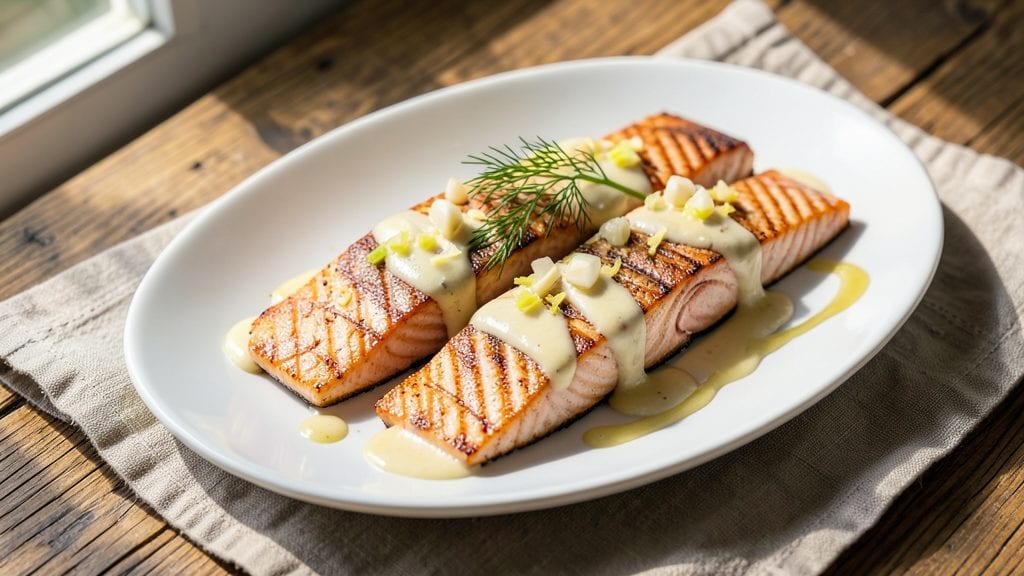
This salmon with alfredo sauce recipe delivers restaurant-quality results with perfectly flaky fish and a velvety, buttery sauce that ties everything together. The secret lies in precise timing—searing the salmon just enough to lock in moisture while the sauce simmers to a luxurious consistency.
I’ve perfected this dish after years of testing, ensuring the fish stays tender and the sauce remains rich without breaking.
The recipe starts with pan-seared salmon fillets, cooked skin-side down until golden and crisp, then finished in a creamy alfredo sauce that coats the fish beautifully. The sauce uses a simple roux technique to create a smooth, velvety base, while a touch of garlic and lemon brightens the richness.
For those who prefer a lighter option, a vegan version is included that still delivers on flavor and texture.
What makes this dish truly special is the balance—flaky salmon with a crisp exterior and a melt-in-your-mouth center, paired with a sauce that’s neither too heavy nor too thin. The result is a dish that feels indulgent yet refined, perfect for a weeknight dinner or a special occasion.
The sauce also works beautifully over pasta or as a dipping sauce for grilled vegetables.
Whether you’re serving this with roasted asparagus, a side salad, or crusty bread, the combination of textures and flavors will impress. The key is keeping the salmon warm while the sauce finishes, so everything arrives at the table at its peak.
Let’s get started—this dish is simpler than it looks, but the results are anything but basic.
Ingredients for salmon with alfredo sauce
Four flaky fillets, rich sauce, and a simple roux—this is your restaurant-quality dinner.
| Ingredient | Amount | Notes |
|---|---|---|
| Salmon Fillets 🐟 | 4 whole | Skin-on, center-cut, 6 oz each |
| Unsalted Butter 🧈 | ½ cup | Cold, cut into 1-inch pieces |
| Heavy Cream 🥛 | 1 cup | Full-fat for creamy texture |
| All-Purpose Flour 🌾 | 2 tbsp | For roux base, sifted |
| Garlic Cloves 🧄 | 4 cloves | Minced, fresh preferred |
| Lemon Juice 🍋 | 1 tbsp | Freshly squeezed |
| Lemon Zest 🍋 | 1 tsp | From 1 organic lemon |
| Salt 🧂 | 1 ½ tsp | Kosher or sea salt |
| Ground Black Pepper 🌶️ | ½ tsp | Freshly cracked |
| Extra-Virgin Olive Oil 🫒 | 1 tbsp | High-quality, for searing |
| Fresh Parsley 🌿 | ¼ cup | Chopped, for garnish |
| Shallots 🧅 | 2 whole | Minced, or sub 1 tbsp onion powder |
| White Wine 🍷 | ½ cup | Dry, like Sauvignon Blanc |
| Parmesan Cheese 🧀 | ½ cup | Freshly grated, for finish |
The salmon is non-negotiable here. Center-cut fillets with skin stay together best—ask your fishmonger for 6-ounce portions. If buying frozen, thaw overnight in the fridge (never in warm water). For the butter, European-style unsalted like Plugrá or Land O'Lakes works best—it has higher fat content. The heavy cream should be cold when added to prevent curdling. Shallots are ideal for their mild sweetness, but substitute 1 tbsp finely minced onion if needed. The white wine adds depth, so use something dry and crisp—none of that sweet dessert wine nonsense.
No heavy cream? Full-fat coconut milk works in a pinch, but the texture won’t be identical. Short on butter? Olive oil in the roux keeps it creamy, though it’ll taste different. The flour is your emulsifier—all-purpose works fine, but if you’ve got bread flour, use it for a slightly thicker sauce. Fresh parsley is for garnish, but dried Italian seasoning at half the amount works if you’re in a bind. The lemon juice and zest brighten the sauce—bottled lemon juice is fine, but zest from a fresh lemon adds that restaurant-quality finish. For a vegan version, swap the butter for vegan butter and use cashew cream instead of heavy cream.
This sauce reheats beautifully—just add a splash of water or cream to loosen it. Store leftovers in an airtight container for up to 3 days in the fridge. The salmon reheats best gently in a warm pan with a splash of water. For the sauce, freeze in ice cube trays for easy single-serving portions. If making ahead, cook the salmon first and keep it warm in a 200°F oven while you finish the sauce. The dish tastes even better the next day once everything melds together.
Why You'll Love This Recipe
- One-Pot Magic: I swear by this recipe when I’m too tired to dirty extra dishes. The butter and flour make that velvety sauce in the same pan where the salmon cooks—no straining, no transferring. Just melt, simmer, and serve.
- Garlic Butter Bliss: That moment when the garlic hits the hot butter? Pure flavor payoff. The sauce clings to the salmon like a hug, rich and buttery without being heavy, thanks to the heavy cream balancing it out.
- Weeknight to Dinner Party: Honestly, this is my go-to for both lazy Tuesdays and when company’s coming. The same creamy sauce works over pasta, as a sauce for grilled fish, or even drizzled over veggies. (Yes, even on a Tuesday night.)
- Leftover Luxury: Between us, the second night is better than the first. The salmon stays tender, and the sauce thickens into something even more decadent—like a lazy Sunday brunch. Plus, it reheats like a dream.
Step-by-step instructions for salmon with alfredo sauce
Master this technique and you'll achieve perfectly flaky salmon with a velvety, restaurant-quality Alfredo sauce.
Prepare the Salmon for Optimal Flakiness
Pat the 4 whole salmon fillets completely dry with paper towels—this ensures maximum crispness on the skin. Place them skin-side down on a cutting board and score the flesh side diagonally in a crosshatch pattern, being careful not to cut through the skin. This creates channels for the sauce to penetrate deeply, guaranteeing that flaky texture we're after.
Season both sides generously with the 1.5 teaspoons salt and 0.5 teaspoon ground black pepper. Let the seasoned fillets rest at room temperature for 15 minutes while you prepare the sauce. This brief resting period allows the seasoning to penetrate slightly, ensuring even flavor distribution throughout the fish.
Create the Alfredo Sauce Base
In a large skillet, melt the 0.5 cup unsalted butter over medium heat until it foams. Add the 2 minced shallots and cook for 3 minutes until softened but not browned. Stir in the 4 minced garlic cloves and cook for an additional 30 seconds until fragrant—this prevents the garlic from burning while developing its full flavor.
Reduce the heat to medium-low and sprinkle in the 2 tablespoons all-purpose flour, stirring constantly for 1 minute to create a smooth roux. This flour will thicken our sauce beautifully. Immediately pour in the 0.5 cup white wine and stir vigorously, scraping up any browned bits from the bottom of the pan. Let this mixture simmer for 2 minutes until the wine has completely evaporated.
Build the Creamy Alfredo Foundation
Gradually pour in the 1 cup heavy cream while whisking continuously to prevent lumps from forming. Add the 1 tablespoon lemon juice and 1 teaspoon lemon zest, then bring the mixture to a gentle simmer. Let it cook for 5-6 minutes until it thickens enough to coat the back of a spoon—this ensures our sauce has proper body without being gluey.
Stir in the 0.5 cup freshly grated parmesan cheese until fully melted and smooth. Taste and adjust seasoning with additional salt if needed. The sauce should be rich, velvety, and perfectly balanced—not overly acidic or salty. Keep the sauce warm over low heat while you finish cooking the salmon.
Sear the Salmon to Perfection
Heat the 1 tablespoon extra-virgin olive oil in a separate large skillet over medium-high heat until shimmering. Place the salmon fillets skin-side down and cook undisturbed for 4-5 minutes until the skin is crispy and golden brown. Flip carefully and cook the flesh side for an additional 2-3 minutes until it reaches an internal temperature of 130°F—salmon continues cooking slightly after removal from heat.
You'll know it's done when the flesh flakes easily with a fork and the edges are just beginning to turn opaque. Transfer the cooked salmon to a warm serving platter and tent loosely with aluminum foil to keep warm while you finish the sauce.
Finish and Serve
Return the sauce to a gentle simmer and stir in the 0.25 cup chopped fresh parsley. Spoon the Alfredo sauce over the salmon fillets, allowing it to cascade beautifully over the top. Garnish with additional parsley if desired and serve immediately with crusty bread or your favorite pasta.
The salmon should be perfectly flaky, with each forkful delivering that luxurious Alfredo sauce clinging to every tender bite. The crispy skin provides a satisfying contrast to the creamy sauce, while the lemon zest adds a bright, refreshing note that cuts through the richness. Serve while warm for the best texture and flavor experience.
Pro Tips For Making Salmon With Alfredo Sauce
- Sear Salmon Skin-Side Down: If your salmon fillets have skin, don’t skip this step—it’s the non-negotiable for crispy edges. Lay them skin-side down in a cold, dry pan, then turn the heat to medium-high and let the skin render for 3-4 minutes before flipping. I learned this the hard way—skipping it means sad, rubbery skin and a dish that feels unfinished.
- Bloom the Flour in Butter: When making the alfredo, melt the butter first, then toss in the flour and garlic. Cook this mixture for a full 1-2 minutes until it’s golden and smells nutty—this is where the sauce’s depth lives. I used to rush it, and the sauce always tasted flat. Sounds weird, but it works: patience here makes a real difference.
- Don’t Boil the Cream: Once you add the heavy cream to the roux, keep the heat low. Let it simmer gently for 5-7 minutes, stirring often, until it thickens just enough to coat the back of a spoon. After burning three batches, I finally figured out that high heat turns the cream grainy and the sauce gluey. Low and slow is your friend.
- Salt the Salmon Before Cooking: Season the salmon fillets generously with salt and pepper at least 20 minutes before cooking—this guarantees the seasoning penetrates the flesh. I skip this when I’m lazy, but the dish is noticeably better when I don’t. Trust me, your future self will taste the difference in every bite.
Essential equipment for great salmon with alfredo sauce
Perfect Skillet
For searing the salmon, I swear by a 10-inch cast iron skillet like the Lodge Pre-Seasoned—it retains heat beautifully and creates that coveted crispy skin. The flat surface ensures even cooking, and the heavy material prevents hot spots.
If you don’t have cast iron, a stainless steel skillet (like All-Clad) works well too, though it may require slightly more attention to heat control. Avoid nonstick—it won’t give you that restaurant-quality crust. 🔥
Sauce Whisk Essentials
A balloon whisk (like the OXO Good Grips) is your best friend for the sauce—it incorporates the heavy cream smoothly without creating lumps. I also keep a heatproof spatula (such as Mercer Culinary Genius) handy for scraping up those delicious browned bits from the pan.
For measuring, a stainless steel measuring cup (like Farberware) ensures accuracy, especially when dealing with the wine and cream. Precision here makes all the difference in texture.
Temperature Control Tools
An instant-read thermometer (I love the ThermoWorks Thermapen ONE) is non-negotiable for checking the salmon’s internal temperature—130°F is your target. For the sauce, a kitchen thermometer with a probe (like the Meater) helps monitor the heat while it thickens.
If you’re new to sauce-making, a wire whisk with a long handle (such as Zwilling) gives you better control over stirring without splattering. These tools take your dish from "good" to "restaurant-quality."
Garnish & Serve
Fresh parsley deserves a sharp chef’s knife (I use Wüsthof) for clean, even chopping—nothing ruins presentation like uneven garnishes. For serving, a slate serving board or ceramic platter keeps everything warm while looking elegant.
If you’re serving pasta alongside, a slotted spoon (like J. Bergner) helps transfer alfredo-coated noodles without breaking them. Every detail matters when plating this dish.
Budget-Friendly Swaps
No cast iron? A heavy stainless steel pan (like Cuisinart MultiClad) works fine—just monitor the heat more closely. For the whisk, a fork and spoon combo works in a pinch, though it’s messier.
Skip the instant-read thermometer? Use the finger test: press gently on the salmon—it should feel firm but still slightly soft, like a ripe avocado. The key is paying attention, not fancy tools. 💡
Nutrition facts
Frequently asked questions
Can I use frozen salmon for this recipe?
Yes, but thaw it properly first! Place frozen salmon fillets in the refrigerator for 24 hours to ensure even thawing. Never use warm water—it promotes bacterial growth. Once thawed, pat the fillets dry thoroughly before seasoning and cooking to achieve that perfect crispy skin.
What's the best way to keep the salmon moist?
Scoring the flesh side in a crosshatch pattern creates channels for the sauce to penetrate, keeping the salmon incredibly tender. Also, never overcook—salmon should reach an internal temperature of 130°F (it continues cooking slightly after removal from heat). The key is high heat for a short time to lock in moisture.
Can I make this recipe without wine?
Replace the 0.5 cup white wine with an equal amount of fish or vegetable stock for depth, or use apple cider vinegar (2 tbsp) mixed with 0.3 cup water for acidity. The sauce will still develop the same rich, velvety texture—just adjust seasoning to taste.
How do I prevent the sauce from breaking?
Never boil the sauce—keep it at a gentle simmer. Add cold heavy cream gradually while whisking continuously to prevent lumps. If the sauce separates, whisk in 1 tsp cornstarch mixed with 1 tbsp cold water until smooth. The roux (butter + flour) is your secret weapon for stability.
What sides pair best with this dish?
Roasted asparagus or green beans bring freshness to cut through the richness, while crusty bread soaks up the sauce beautifully. For a complete meal, serve with fettuccine alfredo (use half the sauce) or a simple arugula salad with lemon vinaigrette. The crispy skin contrasts perfectly with creamy sides.