
Sauces & Condiments
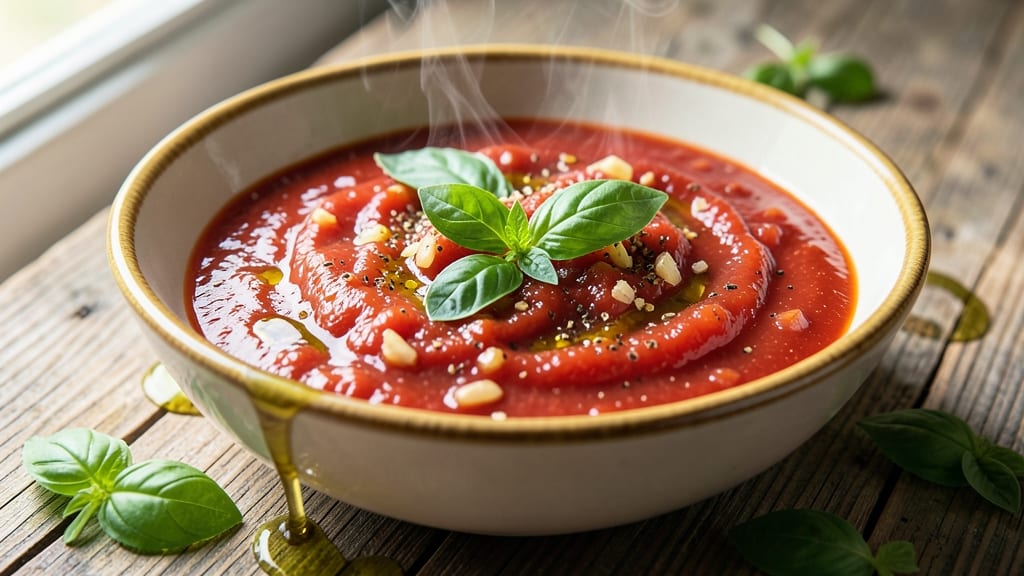
This traditional Italian tomato sauce captures the essence of Italian cooking—simple ingredients, slow simmering, and deep, sweet flavors that build over time. The secret lies in using high-quality San Marzano tomatoes, which deliver that signature sweetness and acidity that define authentic Italian sauces.
I’ve perfected this recipe over years of testing, ensuring every batch delivers that rich, velvety texture and balanced flavor profile that makes it worth the wait.
What sets this sauce apart is the technique: a gentle simmer at low heat allows the natural sugars in the tomatoes to caramelize while developing complex layers of flavor.
Fresh garlic, aromatic herbs, and a touch of olive oil form the foundation, while a splash of red wine adds depth—though you can omit it for a simpler version.
The result is a sauce that’s versatile enough for pasta, pizza, or even as a base for other dishes, but always stays true to its traditional roots.
By the time you’re done, you’ll have a sauce that’s smooth yet vibrant, with a perfect balance of sweetness and acidity that makes every spoonful sing.
The aroma alone will transport you to a bustling Italian kitchen, where fresh ingredients and slow cooking are the only way to do things right. This isn’t just a sauce—it’s a taste of tradition in every bite.
Store it in the refrigerator for up to five days or freeze for months, so you always have the taste of Italy at your fingertips.
Whether you’re serving it over al dente pasta or using it as a topping for bruschetta, this sauce will elevate any dish with its authentic, restaurant-quality flavor. Let’s get started on creating something truly special.
Ingredients for traditional italian tomato sauce
San Marzano tomatoes and aromatic herbs—simple ingredients for a sauce that tastes like Italy.
| Ingredient | Amount | Notes |
|---|---|---|
| San Marzano Tomatoes 🍅 | 28 oz | Whole, peeled or crushed |
| Extra-Virgin Olive Oil 🫒 | ½ cup | High quality, fruity |
| Garlic Cloves 🧄 | 4 cloves | Freshly peeled, minced |
| Yellow Onion 🧅 | 1 whole | Medium size, finely chopped |
| Fresh Basil Leaves 🌿 | ¼ cup | Packed, stems removed |
| Dried Oregano 🍃 | 1 tsp | Italian or Mediterranean blend |
| Dried Red Pepper Flakes 🌶️ | ½ tsp | Adjust for heat preference |
| Salt 🧂 | 1 tsp | Diamond Crystal preferred |
| Black Pepper 🌶️ | ½ tsp | Freshly ground preferred |
| Dry Red Wine 🍷 | ¼ cup | Bold, dry variety optional |
San Marzano tomatoes are the star here. Look for the official DOP label at Italian markets or well-stocked grocery stores like Whole Foods or Trader Joe's—they're sweeter and less acidic than regular tomatoes. If you can't find them, plum tomatoes work in a pinch, but they won't have that same depth of flavor. The garlic and onion should be fresh—yellow onions add sweetness, while red onions bring a sharper bite. For the olive oil, avoid light or refined oils—you want something fruity and peppery that'll stand up to the tomatoes. I usually grab mine from Costco or Olive Oil Shop online.
No San Marzano tomatoes? Plum tomatoes or even good-quality crushed tomatoes will work, but you might need to add a pinch more sugar to balance the acidity. Fresh basil is ideal, but dried basil at half the amount gets you close if you're in a hurry. The red wine is optional—substitute with extra tomato paste or beef broth if you prefer a vegetarian version. For the oregano, Italian or Mediterranean blends have the right earthy notes, but regular oregano works too. If you're sensitive to heat, reduce the red pepper flakes to 1/4 tsp or skip them entirely. The olive oil can be swapped for avocado oil if you're avoiding olive oil, but the flavor won't be quite the same.
This sauce keeps beautifully—1 week in the fridge or 6 months in the freezer. I like to portion it into ice cube trays for easy use later. For freezing, let it cool completely first to prevent ice crystals. When reheating, warm it gently on the stove with a splash of water or pasta water to restore that silky texture. The longer it sits, the better it tastes—those flavors just keep developing. Double the batch if you can; you'll want leftovers.
Why You'll Love This Recipe
- No-Chop Nightmare: I swear by this sauce because the onions and garlic barely need dicing—just a rough chop, then let the olive oil do the work. The San Marzano tomatoes handle the rest, breaking down into silky perfection without fuss.
- Sunshine in a Jar: That first taste of fresh basil swirled into warm, sweet tomatoes? It’s like summer in every bite. The garlic doesn’t overpower—it just lingers, rich and aromatic, while the olive oil ties it all together with pure, golden goodness.
- Weeknight Superhero: This sauce is my secret weapon for lazy Tuesdays or last-minute dinner guests. Simmer it while you toss a salad or boil pasta—it’s done by the time you’re ready, and it elevates everything from grilled chicken to crusty bread.
- Pantry Goldmine: A single batch stretches for days, freezing beautifully for future pasta nights. Between us, I’ve pulled this sauce from the freezer at 6 p.m. on a Wednesday and had a restaurant-worthy meal in 15 minutes. Budget-friendly? Absolutely. Life-saving? Even more so.
Step-by-step instructions for traditional Italian tomato sauce
Let's create a rich, authentic tomato sauce that captures the essence of Italian cooking.
Sauté Onion and Garlic Until Transparent
Heat the 0.5 cup extra-virgin olive oil in a heavy-bottomed saucepan over medium-low heat. Add the 1 whole yellow onion, finely chopped, and cook for 5-7 minutes until it becomes soft and translucent. This gentle cooking prevents burning, which would make your sauce bitter.
Add the 4 cloves minced garlic and cook for another 1-2 minutes until fragrant. You'll smell the garlic release its sweet aroma—this is your cue that it's ready. Be careful not to let it brown, as garlic burns quickly and can overpower the delicate tomato flavor. Remove the pan from heat briefly if it starts to darken too soon.
Deglaze with Red Wine and Add Tomatoes
Pour in the 0.25 cup dry red wine and stir to deglaze the pan, scraping up any browned bits from the bottom. These flavorful bits, called fond, are essential for building depth in your sauce. Let the wine simmer for 2-3 minutes until it reduces by half and the alcohol smell dissipates.
Add the 28 oz San Marzano tomatoes (peeled or crushed) to the pan. Stir well to combine with the onion and garlic mixture. The tomatoes should be fully submerged in the oil and wine mixture. Bring the sauce to a gentle simmer over medium-low heat, then reduce heat to low. Cover the pan and let it cook for 15 minutes to soften the tomatoes and develop their natural sweetness.
Season and Simmer Low and Slow
Uncover the pan and add the 1 tsp dried oregano, 0.5 tsp dried red pepper flakes, 1 tsp salt, and 0.5 tsp black pepper. Stir well to distribute the seasonings evenly throughout the sauce. The red pepper flakes will add a subtle heat, while the oregano brings that classic Italian herb flavor.
Continue simmering the sauce uncovered for 45-60 minutes over low heat, stirring occasionally. This slow cooking process allows the flavors to meld together and the sauce to thicken naturally. You'll know it's ready when the sauce has reduced slightly and coats the back of a spoon. If it becomes too thick, add a splash of water or reserved pasta water to reach your desired consistency.
Finish with Fresh Basil and Adjust Seasoning
Remove the pan from heat and stir in the 0.25 cup fresh basil leaves, packed and stems removed. The basil will add a bright, fresh finish to your sauce. Taste and adjust the seasoning if needed—add more salt or red pepper flakes to suit your preference. The sauce should be well-balanced with a touch of heat, sweetness from the tomatoes, and herbal notes.
Let the sauce rest for 10 minutes before serving. This resting period allows the flavors to settle and the sauce to reach its full potential. Serve your traditional Italian tomato sauce over pasta, with crusty bread, or alongside your favorite Italian dishes. The rich, sweet flavor of the San Marzano tomatoes will shine through, making this sauce a true taste of Italy.
Pro Tips For Making Traditional Italian Tomato Sauce
- Peel & Crush Tomatoes: Skip the can opener—peel the tomatoes first by scoring an X on the bottom, blanching in boiling water for 30 seconds, then ice bath. Crush them by hand (or with a wooden spoon) to break seeds, not pulp, for a rustic texture. I used to rush this, and the sauce always tasted watered-down afterward.
- Sweat Onions Low: Cook onions in olive oil over medium-low heat until translucent, not browned. High heat caramelizes them too fast, turning bitter—this sauce isn’t about sweetness. Stir occasionally and resist the urge to crank the heat; patience here means depth later.
- Remove Garlic Early: Add minced garlic to the onions before they’re fully soft—about 3 minutes in. This prevents burning (which kills flavor) and lets it bloom gently. I learned this the hard way after one batch tasted like a chemistry experiment.
- Salt the Water: When blanching tomatoes, add a pinch of salt to the boiling water. It tightens their skins for easier peeling and preserves their natural sweetness. Sounds odd, but it’s a non-negotiable step in my kitchen—no more stuck peels or bland sauce.
Flavor customization for this recipe
Sweet vs. Tangy Balance
Adjust the sweetness by adding ½ tsp sugar per 28 oz tomatoes if your San Marzano batch tastes tart. For extra tang, add 1 tbsp lemon juice or a splash of balsamic vinegar at the end. I often taste as I go—this sauce should sing with both notes. 🍯
Herb Variations
Swap dried oregano for 1 tsp fresh thyme or ½ tsp fennel seeds for a Ligurian twist. For a Tuscan touch, add 1 sprig rosemary while simmering. Fresh herbs like basil or parsley should always go in at the end to preserve their brightness.
Heat Level Control
Skip the red pepper flakes for a mild version, or add 1 tsp crushed Calabrian chili for serious heat. For smoky depth, stir in ½ tsp smoked paprika during the final 10 minutes of simmering. I keep a small jar of Penzeys' red pepper flakes on hand for precise adjustments.
Creamy Additions
For a Neapolitan-style sauce, stir in ¼ cup heavy cream or ricotta cheese during the last 5 minutes of cooking. For a vegan option, use cashew cream (blend ½ cup soaked cashews with ¼ cup water). These additions create a silky texture while keeping the sauce authentic.
Umami Boosters
Add 1 tbsp tomato paste to deepen color and flavor, or stir in 1 anchovy fillet (mashed) for an authentic Roman touch. For vegetarian umami, use 1 tsp soy sauce or ½ tsp nutritional yeast. These secret ingredients elevate the sauce without overpowering it.
Seasonal Twists
In summer, add ¼ cup diced fresh tomatoes at the end for brightness. For winter, include 1 tsp cinnamon or ½ tsp allspice for warmth. I love making a harvest version with roasted butternut squash puree mixed in—it’s unexpected but delicious. 🍂
Nutrition facts
Frequently asked questions
Why does traditional Italian tomato sauce taste sweeter than store-bought versions?
San Marzano tomatoes are the secret! Their natural sweetness and lower acidity create that signature Italian flavor. Slow simmering also concentrates the sugars, while fresh herbs like basil add brightness. Store-bought sauces often use cheaper tomatoes and additives for shelf stability.
Can I make this sauce without red wine?
Skip the wine and either use 1 tbsp tomato paste or ¼ cup beef/chicken broth instead. The wine adds depth, but it's optional. For a vegetarian version, use vegetable broth or a splash of balsamic vinegar for acidity.
How do I fix a sauce that's too thick or too thin?
For thick sauce, stir in 1-2 tbsp water or pasta water while simmering. For thin sauce, simmer uncovered for 10-15 extra minutes to reduce. Never rush the process—authentic Italian sauces develop flavor through slow cooking. A spoonful of tomato paste can also help thicken without altering taste.
What's the best way to store leftover sauce?
Let it cool completely, then store in an airtight container in the fridge for up to 5 days. For longer storage, freeze in ice cube trays (thaw quickly in microwave) or silicone molds. The flavors actually improve over time! Never freeze hot sauce to prevent ice crystals.
Can I use fresh tomatoes instead of canned?
Yes, but you'll need 4-5 large ripe tomatoes (peeled, seeded, and chopped) plus 1 tbsp lemon juice to balance acidity. Simmer uncovered for 20-25 minutes longer to reduce moisture. Fresh tomatoes work best in summer when they're at peak flavor.