
Sauces & Condiments
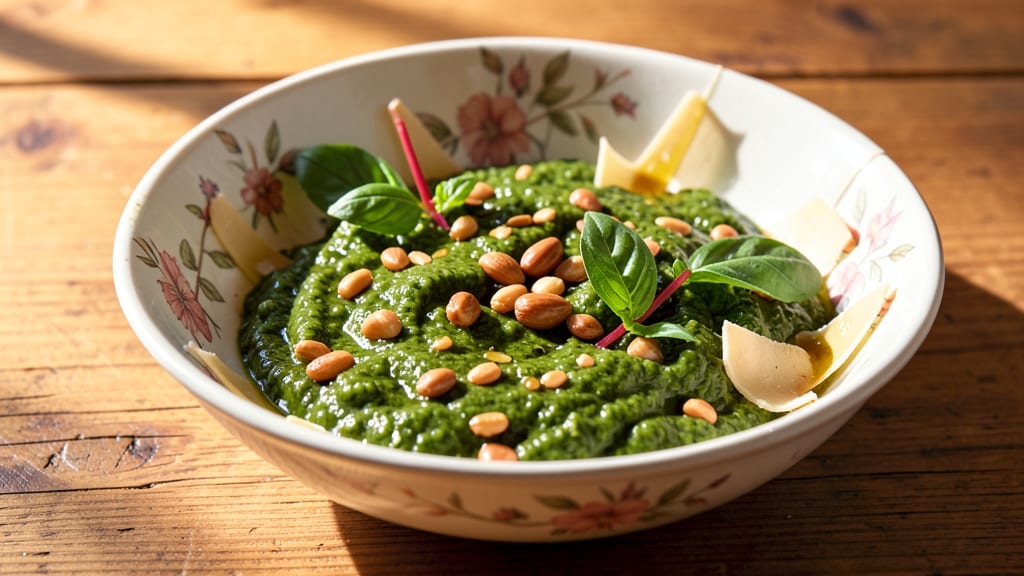
Bobby Flay's pesto sauce recipe transforms simple ingredients into a bold, restaurant-quality condiment that elevates every dish it touches. The secret lies in fresh basil, toasted nuts, and a perfect balance of garlic and lemon—techniques Flay himself swears by for that signature depth of flavor.
I’ve recreated his method, ensuring every batch delivers that signature intensity without compromise.
This sauce starts with high-quality olive oil as the base, where toasted pine nuts add a nutty crunch and aged Parmesan brings rich umami. The garlic and lemon juice cut through the richness, while fresh basil ensures that vibrant green color and bright, herby punch.
What sets this apart is Flay’s approach to texture—creamy yet vibrant, never overly thick or watered down.
By the time you’re done blending, you’ll have a sauce that’s versatile enough for pasta, sandwiches, or drizzled over grilled meats—packed with flavor but still light enough to let the dish shine.
The best part? It keeps beautifully in the fridge for up to a week, ready to transform any meal into something extraordinary.
Ready to master this sauce? Let’s break down the exact steps Flay uses to achieve that restaurant-worthy result every time—no shortcuts, just precision.
Ingredients for bobby flay pesto sauce
High-quality ingredients transform into Bobby Flay's restaurant-worthy pesto sauce.
| Ingredient | Amount | Notes |
|---|---|---|
| Fresh Basil Leaves 🌿 | 3 cups | Packed, stems removed, vibrant green |
| Toasted Pine Nuts 🥜 | ½ cup | Lightly browned for depth |
| Garlic Cloves 🧄 | 4 cloves | Peeled, roughly chopped |
| Extra-Virgin Olive Oil 🫒 | 1 cup | High-quality, fruity variety |
| Aged Parmesan Cheese 🧀 | 1 cup | Freshly grated from block |
| Fresh Lemon Juice 🍋 | 2 tbsp | From organic lemons |
| Diamond Crystal Kosher Salt 🧂 | ½ tsp | Fine grain preferred |
| Freshly Ground Black Pepper 🌶️ | ¼ tsp | From pepper grinder |
Flavor starts with the basil—farmers market varieties have the most vibrant color and brightest taste. For the nuts, Trader Joe's or Costco offer the best value on pine nuts, though walnuts or almonds work in a pinch. The Parmesan must be aged at least 24 months for that rich umami punch; Parmigiano-Reggiano is non-negotiable here. Freshly grated cheese makes all the difference—pre-grated tastes like sawdust. Garlic should be freshly peeled and roughly chopped for maximum aroma release, not minced. The olive oil is where Flay swears by quality—California extra-virgin brands like Corto or Lucini elevate the sauce instantly.
No pine nuts? Walnuts or almonds toasted to the same golden brown work beautifully, though texture changes slightly. Fresh basil wilted? Spinach or arugula at half the amount can stretch it out, though flavor shifts. The lemon juice can be swapped for white wine vinegar if needed, but fresh is always better. For the cheese, Pecorino Romano adds a sharper bite. If you're short on time, pre-grated Parmesan works but loses that signature texture. The salt and pepper should be freshly ground—pre-ground loses potency quickly. For a nut-free version, omit the pine nuts entirely and add an extra tablespoon of olive oil.
This sauce keeps beautifully in the fridge for up to 1 week when stored in an airtight container with a thin layer of olive oil on top. For longer storage, freeze in ice cube trays for 3 months, then transfer to a bag. Flay recommends using it within 5 days for peak freshness. The texture will thicken slightly when refrigerated—just whisk in a splash of olive oil or water to restore creaminess. Portion into small containers for easy use on pasta, sandwiches, or as a finishing drizzle over grilled meats. The sauce intensifies over time, so leftovers are always the best part.
Why You'll Love This Recipe
- No-Fuss Freshness: I swear by this pesto—just pulse basil, garlic, and pine nuts until it’s just chunky. No blender wars, no straining, and the bright green color? That’s your "I actually cooked tonight" moment.
- Umami Bomb: The aged Parmesan and toasted pine nuts hit different—nutty, salty, and rich without overpowering. Drizzle it on pasta or toss it with roasted veggies, and suddenly everything tastes like a fancy Italian bistro.
- Weeknight Swiss Army Knife: This sauce is my secret weapon for lazy nights: swirl it into eggs, dollop it on grilled chicken, or smear it on garlic bread. It’s the one ingredient that makes even the simplest meal feel intentional.
- Leftovers That Don’t Suck: Unlike fresh herbs that wilt, this pesto keeps for days in the fridge—if it lasts that long. Freeze extras in ice cube trays for single-serving portions later. Honestly, it’s the only pesto I trust to not turn into sad, watery sludge.
Step-by-step instructions for Bobby Flay's pesto sauce recipe
This method delivers a vibrant, restaurant-quality pesto with perfect texture and bold flavor.
Toast the Pine Nuts for Depth of Flavor
Heat a dry skillet over medium heat and add the 0.5 cup toasted pine nuts. Toast for 3-4 minutes, stirring constantly, until they turn a light golden brown and become fragrant. Watch carefully—they burn quickly. Remove from heat immediately and let cool for 2 minutes before transferring to a food processor.
Toasting enhances their nutty flavor and prevents them from becoming bitter in the pesto. If you don't have a food processor, you can use a mortar and pestle, but the texture will be slightly coarser. Let the nuts cool completely before processing to avoid burning the basil.
Process the Garlic and Pine Nuts
Add the 4 cloves peeled garlic cloves and the cooled toasted pine nuts to the food processor. Pulse 3-4 times until the pine nuts are finely chopped but not paste-like. Stop before it gets too fine—you want some texture. Scrape down the sides of the processor bowl with a spatula to ensure even processing.
This step builds the aromatic foundation of your pesto. The garlic should be finely minced but still visible as distinct pieces. If you process too long, the garlic can turn bitter. Keep the processor bowl cold by working in short bursts if needed.
Add the Fresh Basil and Pulse
Add the 3 cups packed fresh basil leaves to the processor. Pulse 5-6 times until the basil is finely chopped but still retains some texture. You want it to look like a coarse green paste, not completely liquid. Scrape down the sides again to combine everything evenly.
The basil should be bright green and vibrant—this is where the signature flavor comes from. If your basil is wilted or old, the pesto will taste dull. Use only the freshest leaves for the best results. The texture at this stage should be chunky but well combined.
Incorporate the Cheese and Seasonings
With the processor running, slowly drizzle in the 1 cup extra-virgin olive oil through the feed tube. This prevents the processor from splattering oil everywhere. Add the 1 cup aged parmesan cheese, 0.5 tsp diamond crystal kosher salt, and 0.25 tsp freshly ground black pepper. Process for 10-15 seconds until fully combined and smooth.
The cheese should melt into the mixture, creating a thick, creamy consistency. If it's too thick, you can thin it later with a little water or more olive oil. The salt and pepper should be evenly distributed throughout. Taste at this point—you may want to adjust seasoning before adding the lemon juice.
Finish with Lemon Juice and Adjust Consistency
Add the 2 tbsp fresh lemon juice and process for another 5 seconds. Taste the pesto and adjust the seasoning if needed—you may want more salt, pepper, or lemon juice to balance the flavors. For a smoother texture, process for an additional 10-15 seconds. For a chunkier texture, stop now.
The lemon juice brightens the pesto and cuts through the richness of the cheese. If the pesto is too thick, drizzle in 1-2 tablespoons of water or olive oil while processing until it reaches your desired consistency. Transfer to a serving bowl and taste again—this is your final chance to adjust seasoning before serving.
Pro Tips For Making Bobby Flay Pesto Sauce
- TOAST NUTS LOW: I learned this the hard way—pine nuts burn faster than you’d think. Keep the heat low and stir constantly, or you’ll end up with bitter, blackened bits that ruin the whole sauce. A 3-4 minute pan on medium-low works better than rushing it on high.
- SALT THE GARLIC: Don’t skip this: Toss minced garlic with a pinch of salt before adding it to the basil. It softens the cloves faster and prevents that sharp, raw bite that can overpower the pesto. (Yes, even if you’re impatient like me.)
- PULSE BASIL, DON’T GRIND: A food processor is your friend here, but don’t overdo it—pulse the basil in short bursts to keep it bright and chunky. If you let it run too long, you’ll end up with a sad, mushy paste that tastes like basil soup.
- USE COLD CHEESE: Take the Parmesan straight from the fridge and grate it fresh—never pre-shredded. The cold, sharp flakes melt better into the oil, and the flavor stays vibrant. (Your future self will notice the difference.)
Flavor customization for bobby flay pesto sauce
Spicy Heat Twist
For a Bobby Flay-inspired kick, add 1 tsp red pepper flakes or ½ tsp cayenne pepper while processing the garlic and nuts. For even more heat, blend in 1 tbsp hot honey after finishing the sauce. This balances the spice with natural sweetness—just like Flay’s signature bold flavors. 🌶️
Creamy Variations
Swap out pine nuts for walnuts or almonds (toasted to golden brown) for a richer, nuttier base. For extra creaminess, stir in 2 oz ricotta cheese or ¼ cup heavy cream after blending. Flay often uses these tweaks for pasta dishes where a thicker sauce is desired.
Herb Swaps
Replace basil with cilantro (for Mexican-inspired pesto) or arugula (for a peppery bite). Use half the amount of herbs—1.5 cups—since they’re less dense. Flay’s approach works with any fresh herb, but taste as you go to balance flavors. A pinch of smoked paprika adds depth when using arugula.
Umami Boosters
For deeper savory notes, add 1 tbsp nutritional yeast or ½ tsp fish sauce (for Asian-inspired pesto). Flay sometimes uses sun-dried tomatoes (¼ cup, chopped) blended into the sauce for a Mediterranean twist. These additions work beautifully with grilled meats or roasted vegetables.
Sweet & Tangy
Brighten the sauce with 1 tbsp honey or maple syrup during the final processing. For a tangy finish, stir in 1 tbsp white wine vinegar instead of lemon juice. This variation pairs perfectly with seafood or light salads, balancing the richness of the cheese.
Nut-Free Option
Omit pine nuts entirely and add 1 extra tbsp olive oil plus 1 tsp Dijon mustard for body. Flay’s nut-free version still delivers bold flavor—just blend the mustard with the garlic first to distribute evenly. This works well for those with nut allergies while keeping the sauce vibrant and creamy.
Nutrition facts
Frequently asked questions about Bobby Flay's pesto sauce
Can I use walnuts instead of pine nuts in this recipe?
Walnuts or almonds work perfectly when toasted to a golden brown. They add a deeper, earthier flavor that pairs beautifully with the basil and Parmesan. Just use the same 0.5 cup measurement and toast them until fragrant, about 3-4 minutes in a dry skillet.
How do I fix pesto that's too thick or too thin?
For thick pesto, stir in 1-2 tablespoons of extra-virgin olive oil or a splash of water while blending. If it's too thin, let it sit for 10 minutes to thicken naturally, or simmer gently in a saucepan for 2-3 minutes to reduce. Flay's version should be creamy but still spreadable—adjust to your preference!
What's the best way to store leftover pesto?
Store in an airtight container with a thin layer of olive oil on top to preserve freshness. It keeps well in the fridge for up to 1 week or freeze in ice cube trays for 3 months. Thaw overnight in the fridge—never at room temperature—to maintain texture and flavor.
Can I make this pesto without a food processor?
Yes! Use a mortar and pestle for a rustic texture. Start by crushing the garlic and nuts, then add basil gradually while pressing with the pestle. For the oil and cheese, drizzle slowly while mixing by hand. The texture will be chunkier but still packed with flavor—just blend longer for a smoother result.
What's the secret to Flay's signature bold flavor?
It's all about fresh, high-quality ingredients and proper technique. Toasting the nuts, using aged Parmesan, and balancing the acidity with lemon juice create that signature depth. Flay also emphasizes tasting as you go—adjust seasoning until it's perfectly balanced, not just following measurements blindly.