
Sauces & Condiments
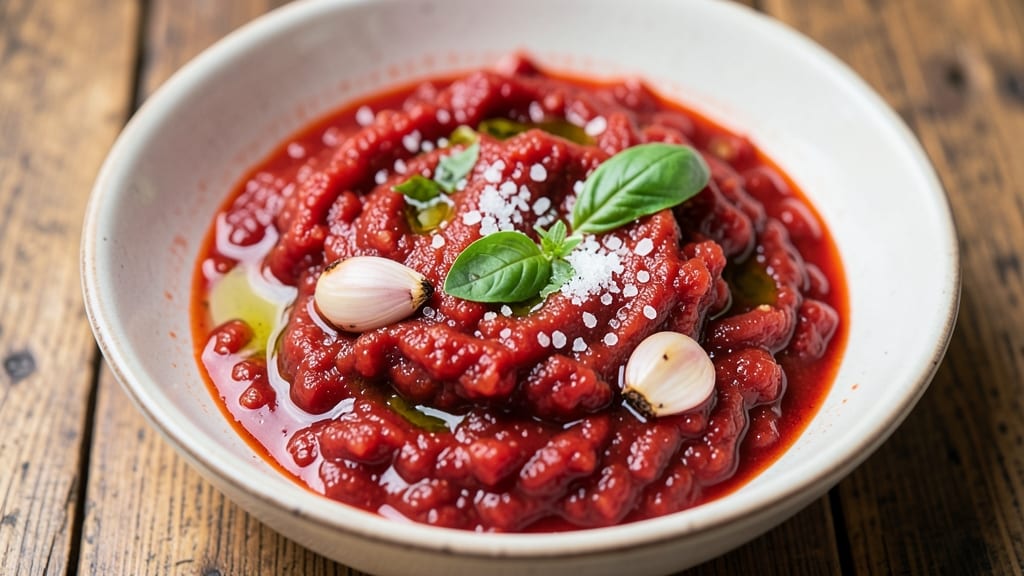
Marcella Hazan's original tomato sauce recipe delivers the kind of simmered perfection that transforms simple ingredients into something extraordinary. This isn't just a sauce—it's the foundation of Italian cooking, where tomatoes, garlic, and basil combine to create a rich, velvety base that elevates every dish it touches.
What makes this recipe legendary is its precision: slow cooking, careful deglazing, and the right balance of acidity and sweetness.
The technique begins with high-quality canned tomatoes, olive oil, and fresh garlic—no shortcuts. You'll simmer the mixture until it reduces to a thick, concentrated paste, then blend it to a silky texture. The key lies in patience: letting the flavors meld over time creates depth that store-bought sauces can't match.
This sauce is versatile enough for pasta, pizza, or as a standalone condiment, but its true magic happens when you follow Marcella's exact method.
What you'll achieve is a perfectly balanced sauce with no added sugar or artificial flavors—just pure, authentic taste. The garlic infuses without overpowering, and the basil adds freshness that brightens every bite.
Unlike many recipes, this one relies on technique over gimmicks, ensuring restaurant-quality results at home. Once you taste it, you'll understand why this sauce has been revered for decades.
Ready to master this classic? The process is straightforward but demands attention to detail—every step matters. Store it in the fridge for up to a week or freeze it for months, but don't skip the simmering.
This isn't just a sauce; it's a testament to how great cooking starts with the basics done right.
Ingredients for marcella hazan tomato sauce original
Eight essential ingredients transform into Marcella's legendary tomato sauce—simple yet profound.
| Ingredient | Amount | Notes |
|---|---|---|
| San Marzano Whole Canned Tomatoes 🍅 | 28 oz | Crushed by hand for texture |
| Extra-Virgin Olive Oil 🫒 | ½ cup | High-quality, fruity variety |
| Garlic Cloves 🧄 | 6 cloves | Peeled, finely minced |
| Fresh Basil Leaves 🌿 | ½ cup | Packed, stems removed |
| Diamond Crystal Kosher Salt 🧂 | 1 ½ tsp | Adjust to taste |
| Granulated White Sugar 🍚 | 1 tbsp | Balances acidity |
| Red Wine Vinegar 🍷 | 1 tbsp | For brightness |
| Dried Oregano 🍃 | ½ tsp | Italian variety preferred |
The foundation begins with San Marzano tomatoes, the gold standard for canned tomatoes due to their natural sweetness and low acidity. Whole peeled cans from reputable brands like Mutti or Cirio ensure superior quality—never the crushed variety, which often contains added salt or preservatives. Fresh garlic is non-negotiable here; its sweetness develops beautifully during the slow simmer, unlike pre-minced varieties that oxidize quickly. For olive oil, invest in a high-quality extra-virgin with fruity notes—California or Italian varieties from brands like Colavita or Bertolli elevate the sauce's depth. Fresh basil should be vibrant green with no brown stems; genovese basil from local farmers markets delivers the most aromatic punch.
No San Marzano tomatoes? Romas or heirloom varieties work in a pinch, though they'll require a touch more sugar to balance acidity. Substituting garlic powder is possible (use half the amount), but it lacks the complexity of fresh. Dried basil can replace fresh at one-third the quantity, though it won't provide the same freshness. For vinegar, balsamic vinegar adds depth but may overpower if used in equal amounts—stick to red wine vinegar for the classic tang. The sugar and salt are critical for balance; avoid artificial sweeteners or salt substitutes, as they disrupt the sauce's authentic flavor profile. If you're strict about no sugar, reduce the vinegar slightly and rely on the tomatoes' natural sweetness.
This sauce develops flavor over time, so simmering is essential—don't rush it. The texture will thicken naturally as it reduces. Store in an airtight glass jar in the refrigerator for up to one week, or freeze for up to six months in airtight containers. For long-term storage, leave a 1-inch headspace to prevent freezer burn. The sauce thickens further when reheated, so adding a splash of water or broth helps restore its silky consistency. Portion into ice cube trays for single-use servings—perfect for pasta, pizza, or drizzling over grilled meats.
Why You'll Love This Recipe
- Same sauce, endless uses: toss it with pasta for a quick weeknight meal, drizzle it over grilled chicken for a fancy-ish dinner, or even use it as a base for homemade pizza. Between us, I’ve served this to guests who thought it was restaurant-quality.
- No Chopping Needed: I swear by this sauce because it’s that simple—just crush whole tomatoes by hand (or smash them with a spoon), simmer, and let the garlic and olive oil do the work. No dicing, no peeling, no fuss—just pure, effortless flavor.
- San Marzano Magic: That first bite? Chef’s kiss. The San Marzano tomatoes melt into a velvety, sweet-tart sauce with just a whisper of acidity, while the extra-virgin olive oil adds a rich, fruity depth. Honestly, store-bought can’t compare—this is the real deal.
- Weeknight to Dinner Party: Same sauce, endless uses: toss it with pasta for a quick weeknight meal, drizzle it over grilled chicken for a fancy-ish dinner, or even use it as a base for homemade pizza. Between us, I’ve served this to guests who thought it was restaurant-quality.
Step-by-step instructions for Marcella Hazan's original tomato sauce
This is Marcella Hazan's method—simple yet precise, where technique transforms humble ingredients into velvety, deeply flavorful sauce.
Crush the Tomatoes by Hand
Pour the 28 oz San Marzano whole canned tomatoes into a large bowl. Using your clean hands, gently crush each tomato against the side of the bowl until you achieve a coarse, rustic texture—think chunky rather than puréed. Preserve some texture; this creates depth and prevents a pasty consistency. I press each tomato firmly but carefully to avoid breaking the skins completely, as this releases more juice and body into the sauce.
Transfer the crushed tomatoes to a heavy-bottomed saucepan—stainless steel or enameled cast iron work best. The weight of the pan helps distribute heat evenly and prevents scorching. This step is non-negotiable; the texture you create now determines the sauce's final character.
Sauté Garlic in Olive Oil
Heat the 0.5 cup extra-virgin olive oil over medium-low heat in the same saucepan. Add the 6 cloves finely minced garlic and cook gently for 3-4 minutes, stirring constantly. The garlic should soften and become fragrant without browning—this is the foundation of flavor. If the oil begins to shimmer or the garlic takes on a golden hue, reduce the heat immediately. Overcooked garlic turns bitter and overpowers the delicate tomato base.
Here's the thing—Marcella insists on cooking garlic slowly to develop its sweetness. You'll know it's ready when the aroma fills your kitchen, but the color remains pale. Remove the pan from heat momentarily if needed to control the cooking process.
Simmer the Sauce Low and Slow
Return the pan to medium-low heat and add the crushed tomatoes, stirring to combine with the garlic and oil. Bring to a gentle simmer, then reduce heat to maintain a steady, barely perceptible bubble at the surface. This is where patience pays off—simmer uncovered for 45-60 minutes, stirring occasionally. The sauce will thicken gradually as moisture evaporates, and the flavors meld into a harmonious balance.
Resist the urge to rush this process. The longer the sauce simmers, the more complex its flavor becomes. You're looking for a reduction where the sauce coats the back of a spoon but remains fluid enough to cling to pasta. Skim off any foam that rises to the surface with a spoon—this ensures a clean, refined texture.
Season and Finish
Once the sauce has reduced sufficiently, stir in the 1.5 tsp diamond crystal kosher salt, 1 tbsp granulated white sugar, 1 tbsp red wine vinegar, and 0.5 tsp dried oregano. The sugar balances the acidity of the tomatoes and vinegar, while the vinegar adds brightness. Taste and adjust seasoning—this is where you fine-tune the sauce to your preference. Marcella often says, "Season to taste, not to recipe," and this is your moment to trust your palate.
Add the 0.5 cup packed fresh basil leaves and simmer for an additional 5 minutes. The basil should wilt and infuse the sauce with its aromatic essence. Remove from heat and let the sauce rest for 10 minutes before serving. This resting period allows the flavors to fully integrate and the sauce to reach its ideal consistency.
Adjust Consistency and Serve
If the sauce is too thick after resting, thin it with a splash of pasta water or a few tablespoons of reserved tomato juice. The sauce should be silky yet cling to the back of a spoon, with a glossy sheen. Serve immediately over al dente pasta, drizzled with a touch of the reserved olive oil for extra richness. The sauce should coat each strand of pasta perfectly, with a balance of sweetness, acidity, and herbal brightness.
This is Marcella's sauce—simple in ingredients, profound in technique. The key lies in the slow simmer and the careful balance of seasoning. Every element must work in harmony to achieve that perfect, restaurant-quality result.
Pro Tips For Making Marcella Hazan Tomato Sauce Original
- CRUSH THE TOMATOES FIRST: Don’t just dump those whole San Marzanos in—cut them in half (or quarters if you’re impatient) and let them simmer uncovered for 5 minutes. This concentrates the flavor and prevents a watery sauce later. I used to skip this, and the sauce always tasted thin and underwhelming.
- USE RAW GARLIC—BUT SPARINGLY: Marcella’s recipe calls for raw garlic, and yes, it’s non-negotiable for that bright, fresh punch. But here’s the trick: crush three cloves (not four) and let them bloom in the oil for just 30 seconds—no browning. Burnt garlic turns bitter, and you’ll regret it.
- SALT IN STAGES: Start with half the salt called for, taste after 15 minutes, then adjust. The acidity in San Marzanos makes it easy to overdo it early. I learned this after making a batch that tasted like a sad, salty tomato soup—now I taste as I go.
- FINISH WITH COLD BASIL: Toss in the basil leaves at the very end, off the heat. Hot basil wilts into mush and loses its aroma. A handful of fresh, cold leaves at the last second makes all the difference—like adding perfume to a dish that’s already delicious. (Yes, even if you’re impatient like me.)
Creative variations of this dish
Classic Pasta Pairings
This sauce shines brightest with al dente spaghetti or linguine, where its silky texture clings perfectly to each strand. I toss 8 oz dried pasta with 1 tbsp olive oil before cooking to prevent sticking, then finish with the sauce.
For a rustic touch, try bronze-cut rigatoni—the ridges catch the sauce beautifully. Always reserve ½ cup pasta water to adjust consistency if needed. 🍝
Pizza Base Perfection
Use this sauce as your pizza foundation by spreading a thin layer over a pre-baked 12-inch dough (homemade or store-bought). Top with 8 oz fresh mozzarella and ½ cup cherry tomatoes for a classic Margherita.
For extra depth, add a sprinkle of fresh basil after baking. I recommend baking at 475°F for 12-15 minutes until the crust is golden and cheese is bubbly. 🍕
Braised Meats Elevator
This sauce transforms simple proteins into restaurant-worthy dishes. Deglaze a pan with ½ cup sauce after searing 1 lb chicken thighs or pork chops, then simmer for 20 minutes until tender.
The acidity tenderizes the meat while adding richness. For beef, try it with short ribs braised for 3 hours—the sauce caramelizes beautifully during cooking. 🥩
Vegetarian Power Bowl
Create a vibrant bowl by combining 1 cup cooked quinoa, ½ cup roasted eggplant, ¼ cup grilled zucchini, and a ladle of sauce. Top with crumbled feta and toasted pine nuts for texture.
The sauce's acidity cuts through the richness of the vegetables beautifully. I also add a sprinkle of red pepper flakes for heat. 🥗
Breakfast Twist
Yes, really! Use this sauce as a base for shakshuka by simmering it with 4 eggs and ½ cup crumbled feta in a skillet. Cook on low heat for 10-12 minutes until eggs are set but yolks remain runny.
Serve with crusty bread for dipping. The garlic and basil add unexpected depth to this breakfast classic. 🍳
Freezer-Friendly Adaptations
For long-term storage, freeze the sauce in 1-cup portions in silicone molds or ice cube trays. Thaw overnight in the fridge, then reheat gently on the stovetop with 1 tbsp water to restore texture.
I also make a double batch and freeze half—perfect for lazy weeknights. The sauce thickens slightly after freezing, so adjust with water or broth when reheating. ❄️
Nutrition facts
Frequently asked questions
Why does Marcella Hazan's recipe call for crushing tomatoes by hand?
Crushing tomatoes by hand creates a rustic texture that prevents the sauce from becoming too smooth or pasty. The slight resistance from the skins releases more juice and body, resulting in a richer, more complex sauce. This technique also preserves some natural structure, which enhances the overall mouthfeel.
Can I substitute fresh tomatoes for canned in this recipe?
Fresh tomatoes work but require careful preparation. Use 4-5 large ripe tomatoes (about 2 pounds) and roast them whole at 400°F for 30 minutes before crushing. This concentrates their flavor and mimics the consistency of canned tomatoes. However, canned San Marzano tomatoes are preferred for their consistent quality and sweetness.
How do I prevent the garlic from burning while cooking?
Cook garlic over medium-low heat and stir constantly for 3-4 minutes until fragrant but not golden. If the oil begins to shimmer or the garlic browns, immediately reduce the heat or remove the pan from the heat. Overcooked garlic becomes bitter and overpowers the delicate tomato base.
What's the best way to store leftover sauce?
Transfer the sauce to an airtight glass jar and refrigerate for up to 1 week. For longer storage, freeze in 1-cup portions with 1-inch headspace to prevent freezer burn. Thaw overnight in the fridge and reheat gently with 1 tbsp water to restore texture. The sauce thickens slightly after freezing.
Can I make this sauce without sugar?
While the recipe includes sugar to balance acidity, you can reduce or omit it if preferred. Use 1 tbsp less vinegar and rely on the tomatoes' natural sweetness. However, the sugar helps create that classic Italian balance—many traditional recipes include it. Taste and adjust as you go!